


So many Top Hospitals lists, so little time
Thomson published its Top 100 Hospitals list this week, which felt like a déjà vu all over again. Didn’t I just see AARP’s top hospitals, along with similar rankings from US News and HealthGrades in recent months?Is this an embarrassment of riches? Or just more heavy-lifting for confused American health citizens?The Thomson Reuters 100 Top Hospitals National Benchmarks study is based on the company’s “National Balanced Scorecard” which focuses on nine measures: mortality, medical complications, patient safety, average length of stay, expenses, profitability, cash-to-debt ratio, patient satisfaction, and adherence to clinical standards of care. Thomson has conducted this study since
Consumers adapt to health @ home in the transformational economy
Two of the top new products launched in 2008 were Zyrtec and alli, according to IRI in their March report, 2008 New Product Pacesetters: The Role of Innovation in a Down Economy. In fact, non-food new product introductions were more successful than food intros in 2008. IRI says this is due to shoppers “taking their personal care into their own hands.” For example, in-sourcing spa treatments to the home instead of spending time (and money) at the spa, and buying home remedies instead of seeing the doctor. Health-at-home is also permeating foodstuffs that are in breakthrough products. The chart shows
Put away $240K for health care in retirement, Fidelity says
In 2009, the cost of health care for a 65-year old couple entering retirement is 50% more than it was in 2002, according to Fidelity Investments. The nest-egg required for retirement health is $240,000, give or take tens of thousands depending on your health risks. In just the past year, this cost increased 6.7%, from $225K. Fidelity has measured the cost of health care in retirement since 2002, when the cost was $160,000. Note the assumptions behind this number: Fidelity assumes that retirees will not have employer-sponsored retiree health benefits, but will take up Medicare. Thus the $240K takes into
EHRs – not about the machine, but the data liquidity
This week’s New England Journal of Medicine provides something of a real-world mini-primer for everyone’s radar on electronic health records and the HITECH funding included in ARRA, the economic stimulus bill. The cautionary paragraph, offered by Mandl and Kohane in their essay, No small change for the health information economy, is: “We take it as a given that health care software must be interoperable and secure and must protect patient privacy. But these qualities are not sufficient to produce an optimal system, which must evolve on a health care platform that extends beyond PCHRs to include other critical infrastructural components,
Workplace benefits: for workers, it's all about financial security
The economy is re-shaping both employers’ and employee’s views on workplace benefits. Most employers continue to value their most important asset: the human capital that is inherent in their employees. This is good news. Retaining employees is the #1 benefits objective for American employers, according to MetLife’s 7th annual Employee Benefits Trends Study. Now, for the #2 and #3 objectives for employers as revealed by MetLife’s survey: due to the economic downturn, employers are looking for more productivity out of their employees, while controlling costs. At the same time, employees are concerned about their financial security. MetLife has found that
2/3 of people want a health plan in every pot
2 in 3 Americans believe that, “we must make it a priority to give every single American quality affordable health care,” according to a poll from Rasmussen Reports. There are dramatic differences on the issue of universal health coverage between Democrats and Republicans, however. 90% of Democrats agree that health for all is a national priority, compared with 37% of Republicans and 55% of Independents. Democrats put health care at #1; Republicans and Independents cite reducing the deficit as a first priority. Health Populi’s Hot Points: Watch for the 63% number to increase in the next few months if unemployment
mHealth – the phone as health app platform
As the Internet disrupted health care information in the late 1990s through the 2000s, watch out for the phone to make the health world flat, taking off from Tom Friedman’s phrasing about The World. There are parts of the world using simple SMS text messaging in public health: to enable peoples’ positive health behaviors. In parts of Africa, safe-sex messaging and medication reminders help people prevent the spread of HIV/AIDS. In Europe, Nokia has tested a wide range of these applications, and Vodafone has been successful in getting teenage diabetics to respond to text messages via phones in an NHS
People with chronic conditions are delaying care: frustration leads to dis-engagement
1 in 4 people with chronic conditions (25%) are delaying care. The percent of people delaying care is even higher for Baby Boomer women (39%) and Latinos (43%). Delaying care crosses all income groups; 22% of people with household incomes of at least $50,000 also delay care. In “Re-Forming Health Care: Americans Speak Out about Chronic Conditions and the Pursuit of Healthier Lives,” the National Council on Aging highlights a survey of 1,000 people over 44 years of age with chronic conditions and reveals the tough challenge they face in managing their care. At the extreme, patients feel a sense
Employers give wellness one more shot in this year of economic decline
Even though profitability for American business will be elusive in 2009, many employers are increasing employee wellness programs — and not cutting budgets for these programs. According to Buck Consultants’ survey, employers can find that wellness programs actually help employees deal with the very issues that the economic downturn creates. Since the beginning of the economic downturn in the U.S., Buck’s survey found that employees’ use of wellness programs increased for over one-half of employers. The key metrics for measuring success of thesee programs are cost-effectiveness, changing employee behavior, and measuring health status. Nearly one-half of employers said they were
Consumer engagement is growing in health and driven by costs
A few more consumers are engaging with their health and health care system, according to Deloitte’s second survey into health care consumers in the U.S. Perhaps that’s because 9 in 10 Americans believe that health care costs are a threat to their personal financial security — regardless of whether they have health insurance or whether they’re sick.Deloitte’s 2009 Survey of Health Care Consumers, in this second year of the study, finds health citizens more anxious and more critical of their health system.As the angst grows, though, so, it seems, do behaviors that demonstrate greater health engagement — at least for
Stressful times for States and Health Care in 2009-11
Don’t assume that State Medicaid programs will cover the vulnerable populations this and next year. Even with the stimulus funding provided in ARRA, Governors will be hard-pressed to cover all of the growing demands for health care among citizens in their states. Governors’ budgets are severely constrained due to declining tax receipts and increasing financial obligations, especially for education and health care. According to the Center for Budget and Policy Priorities (CBPP), the American Recovery and Reinvestment Act (ARRA) includes about $140 billion in fiscal relief to the States. However, this funding will cover only about 40% of the $350
Consumer engagement 30 years on: still experimenting
When citizens have more financial skin in the health care game, do they behave more like consumers — looking for and finding value-based health care? And will that behavior lower health care costs? According to 30 years of this social experiment, the jury is still out. But value-based plans may be emerging as a useful model to promote rational use of care that works, while increasing consumer satisfaction. The Employee Benefit Research Institute (EBRI) held a forum to debate the track record of consumer-directed health plans in December 2008, Outlook for Consumer/Patient Engagement in Health Care—30 Years into the Experiment.
Health costs as a global competitive disadvantage – the Business Roundtable speaks
“The problem with the U.S. health care market is that it doesn’t really function as a market – it leaves major consumer needs unmet, costs unchecked by competition and basic practices untouched by the productivity revolution that has transformed every other sector of the economy.” That quote isn’t from a Marxist-leaning, left-wing political operative — it was spoken by Ivan Seidenberg, the Chairman and CEO of Verizon, the telecommunications firm that sits as #17 on the 2008 Fortune 100 list. As one of the largest companies in the world, and certainly in telecomms, Seidenberg has to compete in a global
Hospitals' fiscal health is eroding
The current economic state of the American consumer-citizen is directly impacting the fiscal health of the American hospital.As fewer patients are seeking care for hospital services, providers are struggling to make ends meet. Over 50% of hospitals had a negative total margin in the fourth quarter of 2008; the year before, 31% of hospitals had a negative total margin.The Colorado Hospital’s DATABANK project has compared financial data for 658 U.S. hospitals and published their findings in, The Impact of the Economic Crisis on Health Services for Patients and Communities.While these data do not represent all U.S. hospitals, this report can
Can Wal-Mart Mass Merchandise Electronic Health Records?
“We believe America can have high quality, affordable and accessible health care by 2012.” Who said that? If you guessed President Obama, Senator Edward Kennedy, or Hillary Clinton, you’re wrong. It’s Wal-Mart, on its Health and Wellness webpage. Wal-Mart’s got a new direct-to-physician strategy: selling electronic health records (EHRs). The world’s largest retailer, #1 on the Fortune 100, expands on the company’s experience with retail health clinics. The chain now has 30 clinics sprinkled throughout the south, and in each clinic, there’s an EHR system. The EHRs will be offered through Wal-Mart’s subsidiary, Sam’s Club, jointly with Dell and eClinicalWorks,
Most Americans are worried about affording health care
2 in 3 Americans are concerned about being able to afford health care and prescription drugs. While middle-aged Americans aged 45-54 are the most concerned (76% of the cohort), even 54% of younger people between 18 and 34 years of age are worried about health care costs.HarrisInteractive/HealthDay’s latest suvey into personal health economics finds that people are delaying or avoiding consuming care due to cost. The most common health encounters Americans are avoiding due to cost include:– Dental visits (34%) – Physician visits (28%)– Not receiving a medical test, treatment or follow-up recommended by a doctor (23%)– Prescription drug fills
Happy 50th Birthday, Barbie – A Doctor for 22 Years
The Barbie doll was born in March 1959, marking this month her 50th birthday. She began life as a beach beauty and fashion model in a zebra-striped swimsuit. By 1965, she scored many careers including American Airlines Stewardess, Nurse, Teacher, and Astronaut. In 2006, USA Today named her one of the Top 101 Most Influential People Who Never Lived. It took 28 years for Barbie to morph into Doctor Barbie, shown in the photo on the left. Note the tagline printed on the front bottom of the box: “She changes from doctor to glamorous date!” This first Doctor Barbie came
Health reform and healthy food
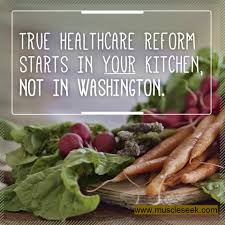
While the policy wonks and economists and legislators and lobbyists convene to come to “yes” on a coherent approach to health reform for America, there is some (literally) low-hanging fruit that will help the nation bend the health cost curve: it’s healthy eating. Last year, the only two stocks on the Dow Jones Index that moved in a positive direction were Walmart and McDonald’s. Both have received bad raps concerning their role in the nation’s diabesity. Surprisingly, McDonald’s ended up on Health magazine’s list of the Top 10 America’s Healthiest Fast Food Restaurants this week. With 14,000 locations, this chain
The economic downturn's impact on employer-sponsored health benefits
Employers providing health insurance to employees continue to focus on workers’ health and productivity, despite economic decline and the need to cut costs. This is good news for 2009. 2010 may be a different story, depending on the length and depth of the recession. Hewitt’s 10th Annual Health Care Report, Challenges for Health Care in Uncertain Times 2009, surveyed over 340 employers in January 2009. 75% of employers said they planned to focus on improving employee health and productivity in the next 3 to 5 years. 19% (1 in 5) said they would stop directly providing health care benefits. This
As DTC ads recede, Rx-email grows for value and support
Most people who receive email messages from pharmaceutical companies tend to like it. 9 in 10 believe it’s a good way to learn about new products entering the market — nearly as many people as those who like receiving travel offers via email. This finding comes from Epsilon‘s Email Branding Study, released in early March 2009. Consumers see a very valuable aspect of email from pharma companies is receiving coupons to use in paying for prescription drugs, as well as learning about products. A third value of email from drug companies is receiving a source of support in personal medical
Patient Satisfaction with Docs is Up, and Quality Could Follow
Patients have spoken, and they really like their care providers. It’s good news for medical practices that patient satisfaction is on the rise, and has been for the past year. As practices pay attention to consumer-facing issues like waiting room times, ease of scheduling, and, yes, exam room manners, patients get more satisfied with care. This survey dovetails nicely with a study published in the March 3, 2009, issue of the Annals of Internal Medicine, which finds that patients who are more connected to a physician were most likely to receive recommended care. The study, Patient-Doctor Connectedness and the Quality
The #1 fear among Americans in the recession is job loss; health costs follow
American consumer sentiment over the past year feels and looks like a rollercoaster ride in freefall, ever driving downward as the chart shows. It’s jobs and health costs forcing the downward trajectory. More than stock market declines and saving for retirement, Americans fear two things most in this recession: losing their job, and the costs of health care. 38% of Americans cite unemployment as their biggest concern in early February 2009. Unemployment fears are shared by both men and women. Younger Americans are more concerned about losing a job (50%) than older people (22%) — who are more concerned about
 I'm grateful to be part of the Duke Corporate Education faculty, sharing perspectives on the future of health care with health and life science companies. Once again, I'll be brainstorming the future of health care with a cohort of executives working in a global pharmaceutical company.
 Jane joined host Dr. Geeta "Dr. G" Nayyar and colleagues to brainstorm the value of vaccines for public and individual health in this challenging environment for health literacy, health politics, and health citizen grievance. Click onto the Pfizer Value of Vaccines site and you can watch four episodes covering the challenges with adult vaccination, the employer and health plan member's journey to vaccination, reimbursement, and collaborating for proactive prevention.
 I'm grateful to be part of the Duke Corporate Education faculty, sharing perspectives on the future of health care with health and life science companies. Once again, I'll be brainstorming the future of health care with a cohort of executives working in a global health care enterprise.