

 Wearing his Walking Gallery jacket painted by (im)patient advocate, Regina Holliday, Dr. Eric Topol evangelized the benefits of digital medicine and consumer empowerment in health care, largely summarizing his epic (pun intended – wait for Hot Point, below) book, The Creative Destruction of Medicine. A founder of the West Wireless Health Institute (now known as West Health), Dr. Topol is a physician and researcher at Scripps and was recently named as editor at Medscape. A new piece of Topol Trivia for me is that GQ magazine called him a rock star of science. Dr. Topol is one of the more edgy keynote speakers at HIMSS, challenging traditional “population health” — that is, care delivered by physicians and hospitals that is the same protocol for every patient, regardless of their unique characteristics. He noted that since 2004, there are digital platforms that health care hasn’t yet harnessed — such as Facebook, YouTube, Google, and Pinterest — that other industries have. Calling out recent book titles, Race Against the Machine and The Third Industrial Revolution, Dr. Topol said, “the third industrial revolution hasn’t hit medicine.” He referred to this as Gutenberg Medicine. Starting with the iPod in 2001, Dr. Topol recounted the growth of mobile devices including the Blackberry in 2002, the smartphone in January 2007, up to e-readers and tablets. These have, “collectively changed our lives,” Dr. Topol explained, but at the same time have created a problem he termed “homo distractus.” In 1998 we humans had an attention span of about 12 minutes, which diminished to 5 minutes by 2008. Where is that attention span today, do you think, challenged Dr. Topol to the HIMSS13 spillover audience. Dr. Topol then talked about the positive role of patient social networks, naming PatientsLikeMe, MyBCTeam, Inspire, M:edHelp, CureTOgether, CureTogether, Better Health, CaringBridge among other groups who are crowdsourcing care and cures and providing patients with real-time support and counsel. And, IBM Watson is learning its way to saving lives, as attested by the latest mass media stories on the famous digital Jeopardy champion.
Eric Topol creatively destroys medicine at #HIMSS13
By Jane Sarasohn-Kahn on 5 March 2013 in Bio/life sciences, Connected health, Consumer-directed health, Design and health, Diabetes, Digital health, Electronic health records, Fitness, Health and safety, Health at home, Health care information technology, Health Consumers, Health engagement, Health IT, Health literacy, Health marketing, Health social networks, Healthcare DIY, HealthcareDIY, Hospitals, Internet and Health, Medical innovation, Medical technology, mHealth, Mobile health, Patient engagement, Personal health records, Prevention and wellness, Public health, Remote health monitoring, Sensors and health, Social media and health, Telehealth, Telemedicine
“Watson could have gone anywhere after Jeopardy, but he went into health care,” Dr. Topol joked, showing articles titled “Watson goes to medical school” and “Paging Dr. Watson” as examples of how the mainstream press is covering this technological emergence in medicine. “Eventually,” Dr. Topol forecasted, “We will all have access to Watson and his equivalent.”
What Big Data can do, which is Watson’s tour de force, is move medicine from the broad one-solution-fits-all population approach to personalized medicine. Dr. Topol enumerated several of the most publicized studies into the harms of current-day common practice, from regularly scheduled mammograms to prostate PSA tests — many of which aren’t indicated for “all” people and add unnecessary costs — and introduce harm — into patients’ lives.
Where Dr. Topol began to “destroy” (as in the title of his book and the Schumpeter classic on economic growth) health care was in applying the theme of medical bills “killing us,” riffing off of the landmark TIME magazine article in February 2013, and Orwell’s quote, “the hospital is the antechamber to the tomb,” written in 1946 — decades before the IOM classic To Err is Human was published.
Health Populi’s Hot Points: The most challenging part of Dr. Topol’s talk happened when he discussed the need for hospitals – “why have a hospital,” he asked, “unless it’s for ICU a procedure room?” Why have ahospital unless it’s for ICU, or for a procedure room. Most people, Dr. Topol believes, could and should be monitored in the convenience and safety of their own homes.
“Why do we need office visits and clinics when so much can be done remotely,” he posed to the standing room only crowd, a large proportion of whom work for, well, doctors offices and hospitals and clinics.
The final coup de gras was when Dr. Topol put a picture up of the 2 cops from the 1960s TV classic, Car 54 Where Are You? then posing, rhetorically, “Epic, where are you?” Dr. Topol went on to say he supported the just-announced CommonWell non-profit initiative where several prominent health IT organizations pledge to work toward open source standards in health care.
Then one-half of the audience seemed to gasp and the other clapped gleefully.
This is the story of HIMSS and health IT today, in the midst of change from Old World to New.
As part of that movement, I’m speaking this afternoon on Building Patient 2.0 – how consumer facing health IT is transforming health care. Dr. Topol will surely be on my shoulder and in my panel’s message.
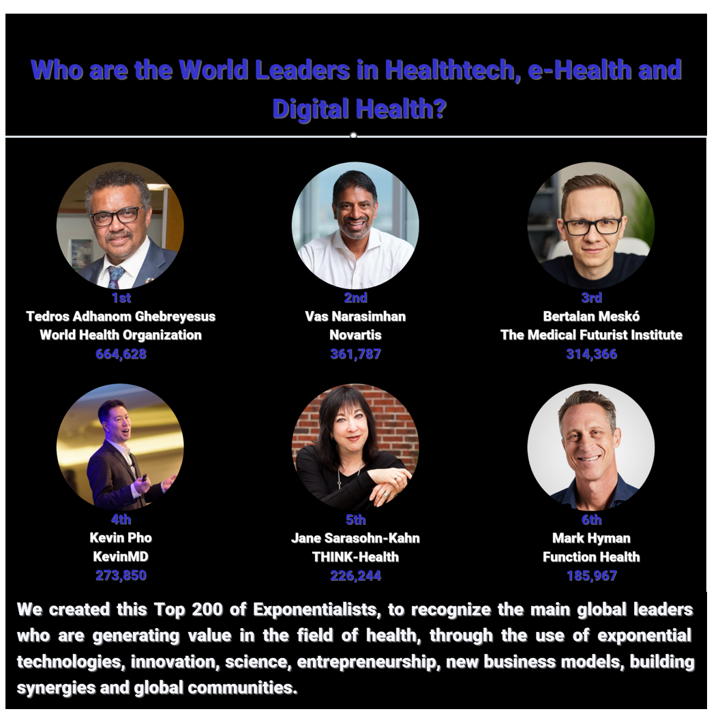 I'm in amazing company here with other #digitalhealth innovators, thinkers and doers. Thank you to Cristian Cortez Fernandez and Zallud for this recognition; I'm grateful.
 Jane was named as a member of the AHIP 2024 Advisory Board, joining some valued colleagues to prepare for the challenges and opportunities facing health plans, systems, and other industry stakeholders. Looking forward to AHIP 2024 in Las Vegas come June 11-13, 2024.
 Join Jane at AHIP's annual meeting in Las Vegas: I'll be speaking, moderating a panel, and providing thought leadership on health consumers and bolstering equity, empowerment, and self-care.