


Healthcare 2030: Are We Consumers, CEOs, Health Citizens, or Castaways? 4 Scenarios On the Future of Health Care and Who We Are – Part 2
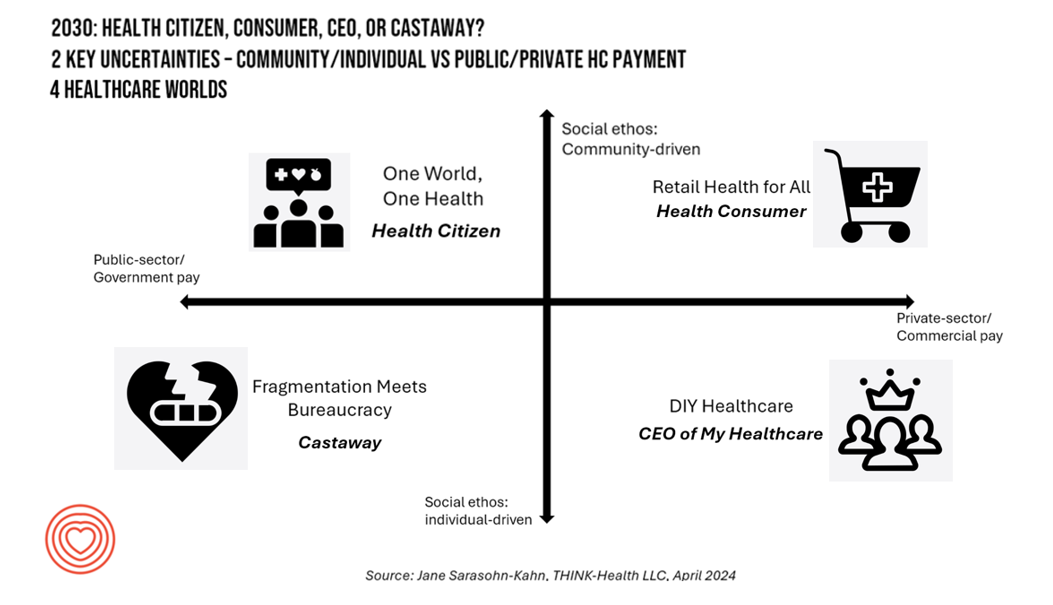
This post follows up Part 1 of a two-part series I’ve prepared in advance of the AHIP 2024 conference where I’ll be brainstorming these scenarios with a panel of folks who know their stuff in technology, health care and hospital systems, retail health, and pharmacy, among other key issues. Now, let’s dive into the four alternative futures built off of our two driving forces we discussed in Part 1. The stories: 4 future health care worlds for 2030 My goal for this post and for the AHIP panel is to brainstorm what the person’s
Rebel Health: The Personal and Professional Passion of Susannah Fox
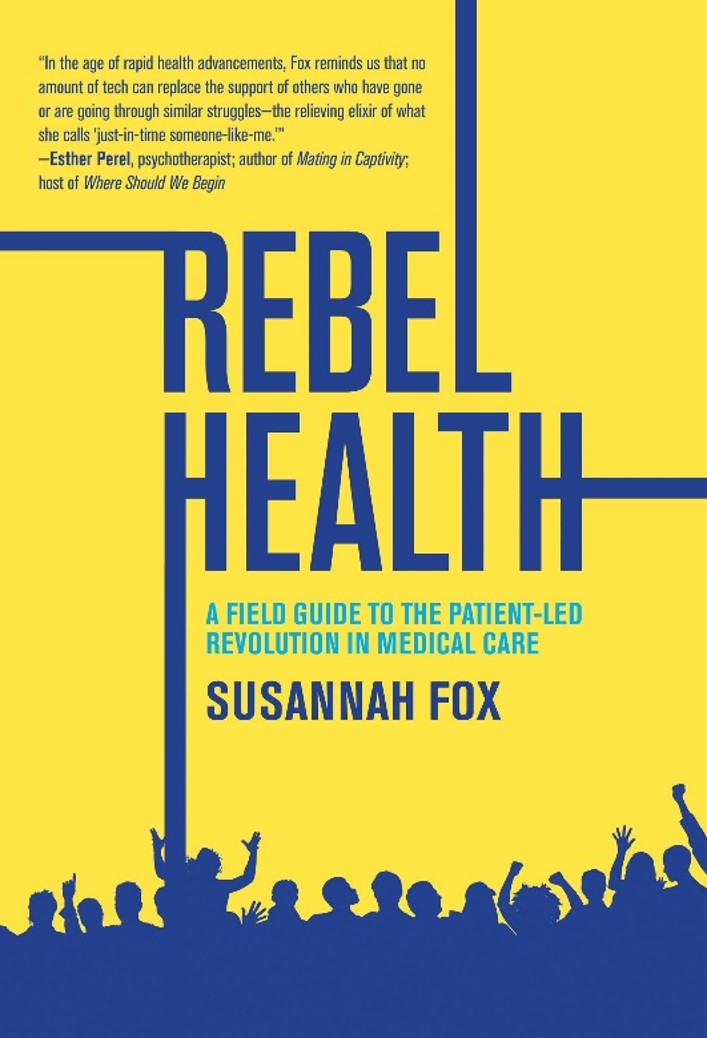
A “rebel” is both a noun and a verb. As a noun, Merriam-Webster tells us that a rebel is a person who opposes or takes up arms against a government or a ruler. As a verb, “to rebel” is to oppose or disobey one in authority or control, or otherwise renounce and resist by force the authority of one’s government.” An additional definition of the verb is, “to feel or exhibit anger or revulsion.” If you’ve been a patient facing a diagnosis of an illness, whether rare or common, you may well have felt these various feelings stirring inside your self.
HeartMates, Bringing Community and Heart Health Love from Damar Hamlin – Abbott at #CES2024

The heart is a major health-category at CES 2024, from wristband wearable tech to remote health monitoring devices enabling cardiovascular hospital-to-home care. Abbott, one of the first life science companies to exhibit at CES back in 2022, announced the HeartMates program here at #CES2024 today as part of a panel titled Ahead of the Game: Revolutionizing Athlete Safety with Emerging Health Tech. I have both professional and personal interests in athlete safety, having two nephews who have been involved in acute sports injury and brain health. The panel discussion featured the latest research findings on injury prevention and recovery, with
A Public Health Wake-Up Call: Reading Between the Lines in IQVIA’s 2023 Use of Medicines Report
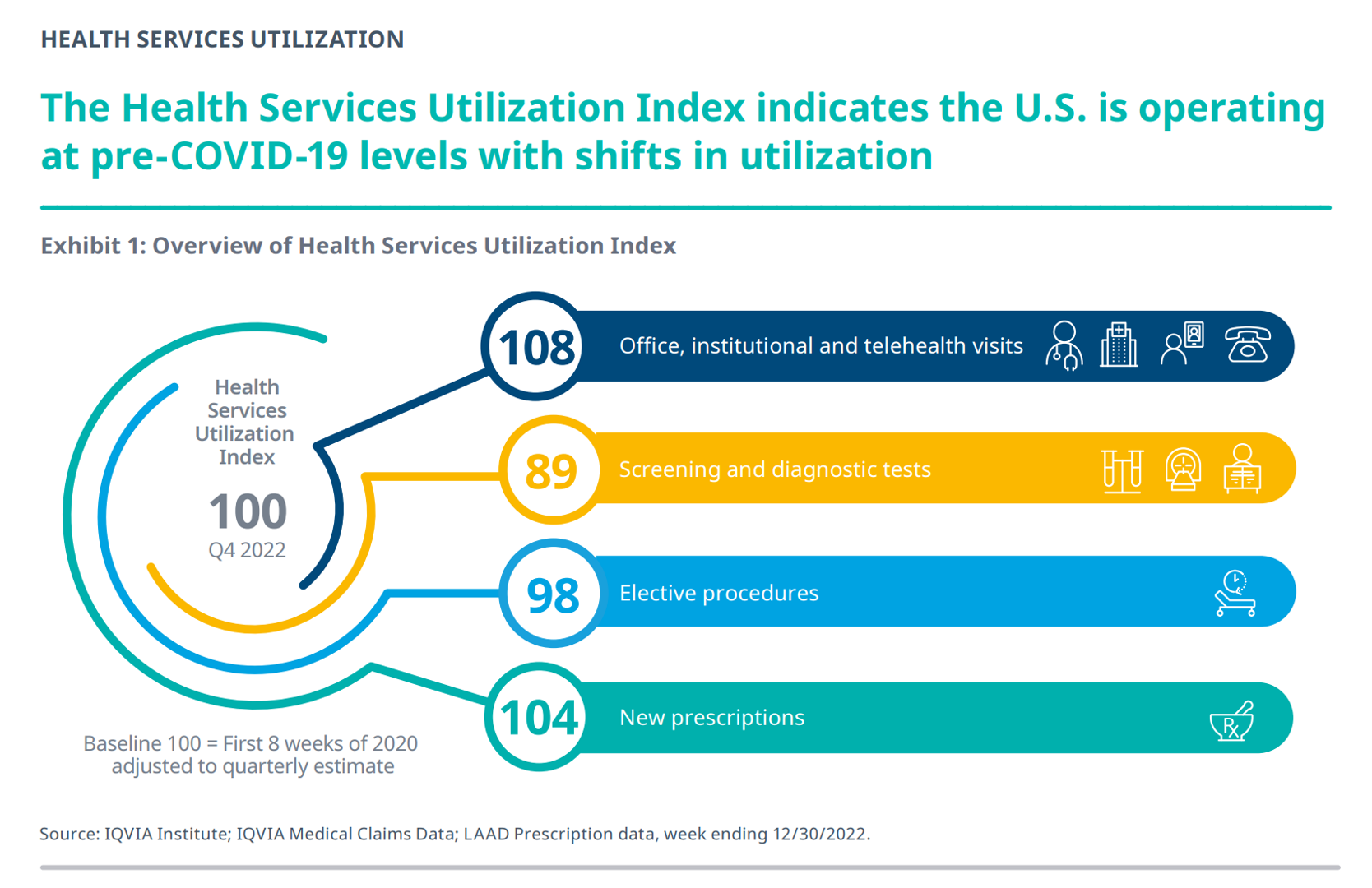
Reviewing the annual 2023 report from the IQVIA Institute for Human Data Science discussing The Use of Medicines in the U.S. is always a detailed, deep, and insightful dive into the state of prescription drugs. It’s a volume speaking volumes on the current picture of prescribed meds, spending and revenues, health care utilization trends, and a forecast looking out to 2027. In my read of this year’s review, I see a flashing light for U.S. health care: “Wake up, public health!” I’ve pulled out a few of the data points that speak to me about population health, prevention and early
Partnering Up in the Health Care Ecosystem to Drive Transformation – for Organizations and Health Consumers Alike
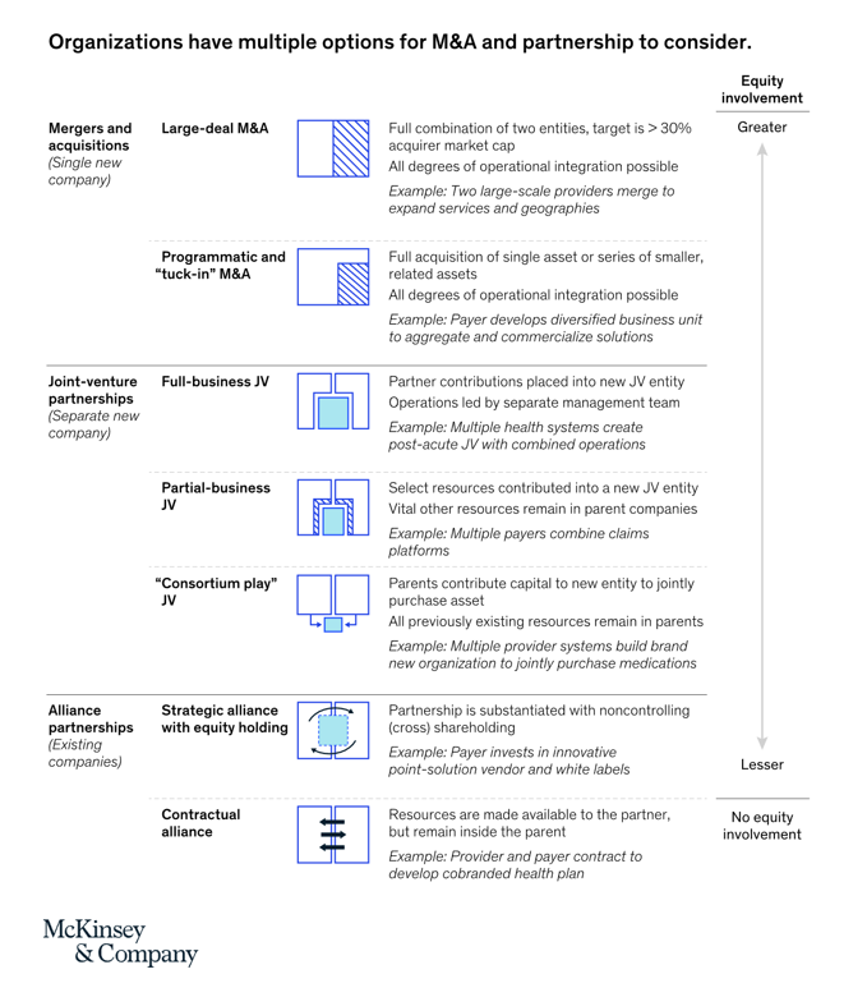
“Partnerships, including JVs and alliances with other healthcare organizations and with new entrants, are just one way to access new capabilities, unlock speed to market, and achieve capital, scale, and operational efficiencies” in health care transformations. “In an environment with continued competition for attractive assets and significant capital in play from institutional investors, these partnerships may also be the most accessible way for organizations to capture value in expanding healthcare services and technology value pools,” we learn in Overcoming the cost of healthcare transformation through partnerships from a team of health care folks with McKinsey & Company.
Hacking Health Care, Your Top Health-Tech Summer Read
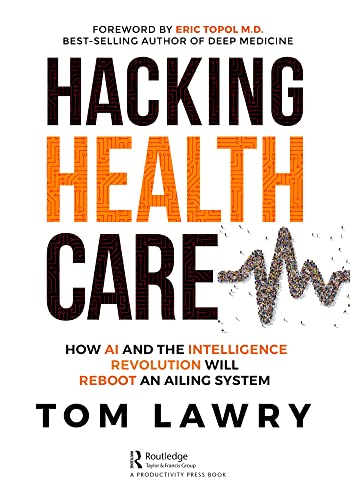
“Tom Lawry reminds us that the health care industry can shift from glacial to warp speed when it needs to. Given the right tools, we can evolve from health systems to systems of health, baked with Responsible Intelligence to do good while embedded with respect, inclusion, and transparency. Health citizens deserve Tom’s vision to emerge,” I wrote in a quote on the back of Tom’s new book, Hacking Health Care: How AI and the Intelligence Revolution Will Reboot an Ailing System. Tom knows whereof he speaks and writes and opines: he has
What Person-Centered Interoperability Looks Like: Seqster
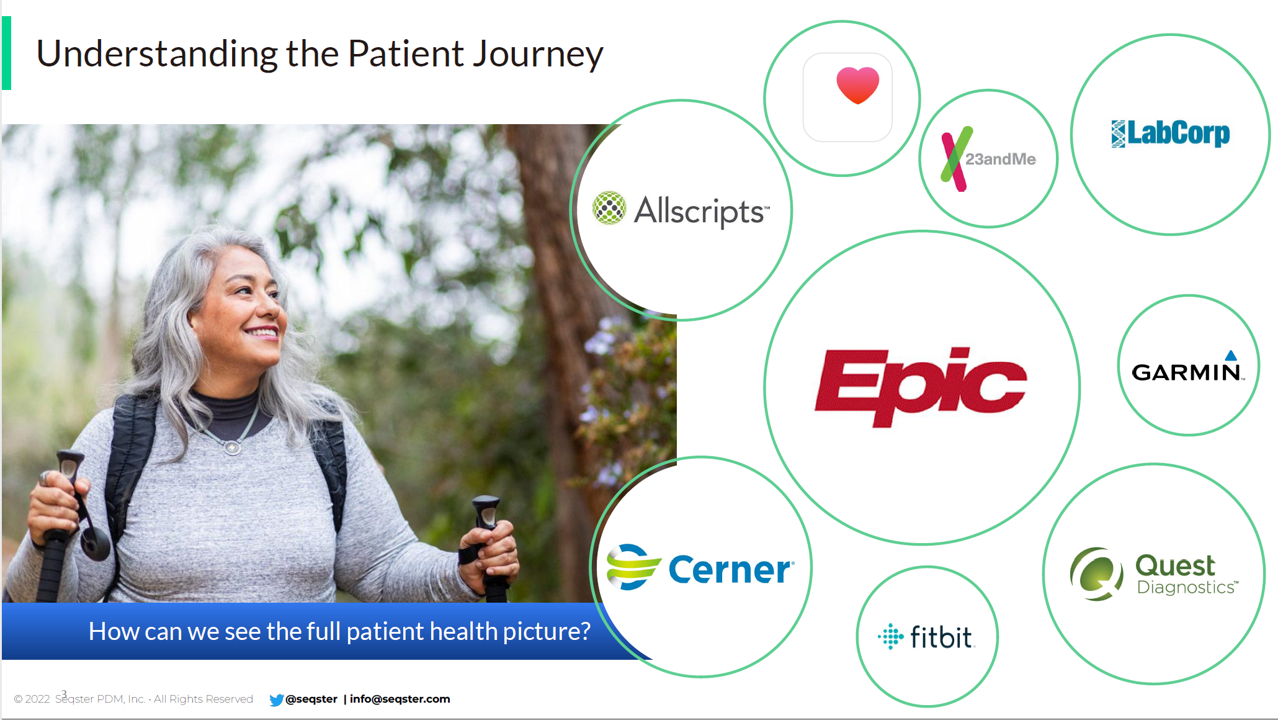
He had me at the statement, “I believe health data is medicine.” Those were the words of Ardy Arianpour, CEO and Co-Founder of Seqster, when sharing with me how his company was founded. We met up last week at the DIA Europe 2022 meeting (Drug Information Association) in the cool SQUARE Conference Center in Brussels, Belgium (my current home base for work and life). It was a rare opportunity to sit still with this on-the-go guy with whom an hour spent is the equivalent of three hours with most other folks. Ardy and the team call Seqster “the operating system
Why #CES2022 Will Be Keynoted By A Health Care Innovator for the First Time
In October 2021, the Consumer Technology Association (CTA) announced that Robert Ford, CEO and President of Abbott, would give a keynote speech at CES 2022, the world’s largest annual convention of the technology industry. “This marks the first time in CES history that a healthcare company will take the mainstage for a keynote at the show,” CTA’s press release stated. I covered this announcement in the Health Populi blog at the time, and today want to double-down on the significance of Ford’s leading presence at #CES2022. When announced, the news was a signal that health care and the larger tech-enabled
Digital Health Tools Are Finding Business Models – IQVIA’s 2021 Read on the Health of Digital Health
In the Age of COVID, over 90,000 new health apps were released, as the supply of digital therapeutics and wearables grew in 2020. Evidence supporting the use of digital health tools if growing, tracked in Digital Health Trends 2021: Innovation, Evidence, Regulation, and Adoption from IQVIA Institute for Human Data Science. IQVIA has been closely following the growth, investment in, and clinical evidence for digital health since 2013, when I reviewed their first paper on “mHealth” here in Health Populi. Then, IQVIA evaluated the universe of about 40,000 apps available in the iTunes store. In today’s report, the company quantifies
Aduhelm and Alzheimer’s Disease: A Potential Medicare Budget-Buster Puts A Blazing Light on Health Care Costs and Innovation
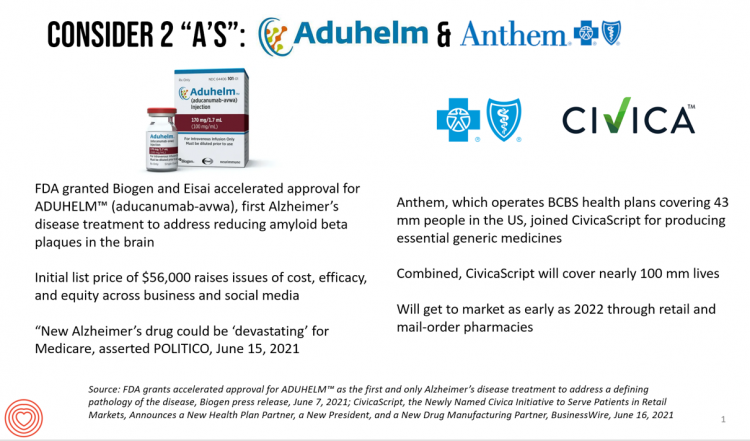
The FDA’s approval of the first therapy to treat Alzheimer’s Disease in over twenty years brought attention to a not-yet-convened debate of U.S. health care costs and spending, innovation, and return-on-the-investment (as well as “for whom” do the returns accrue). In my latest post for Medecision, I explore different angles on the Aduhelm and Alzheimer’s discussion, covering: The macro- and micro-economics of Alzheimer’s and the $56,000 list price for the drug The FDA regulatory process and aftermath U.S. consumers’ bipartisan support for drug price regulation through Medicare negotiation and private/commercial sector adoption Congressional legislation addressing the price of medicines in
The Healthcare and Macro-Economic Impacts of Living with Endemic COVID – Listening to Fitch
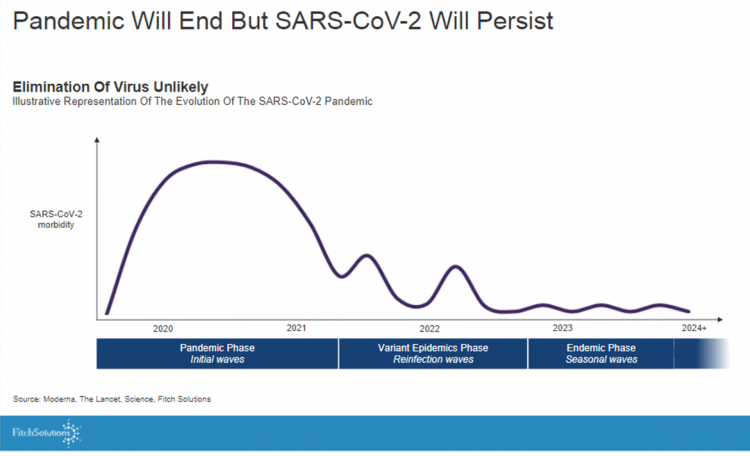
Getting totally rid of the coronavirus isn’t likely, so we humans must accept the fact that SARS-CoV-2 will be endemic. The economic and healthcare system impacts of this were explored in the Post-Covid Healthcare Landscape, delivered by Fitch Solutions’ Jamie Davies and Beau Noafshar, leaders in the Pharmaceuticals, Healthcare, and Medical Devices groups. I welcomed the opportunity to learn from this team’s approach in weaving together the dynamic issues that help us to plan for the long-tail of COVID-19 and its impact on the economy and prospects for the health care industry and health citizens. The first graph illustrates the
What Do Democrats and Republicans Agree On? Allowing Negotiations to Lower Rx Prices
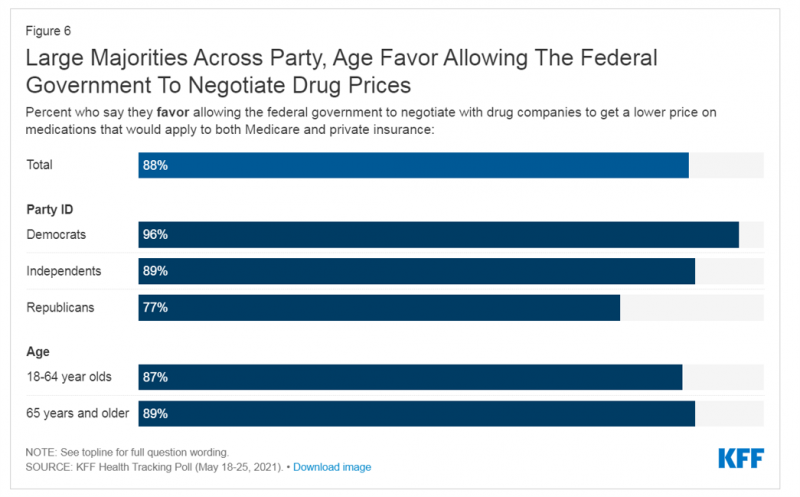
People living in the U.S. have weathered over fifteen months of life-shifts for work, school, prayer, fitness, and social lives. So you might think that the most important public priority for Congress might have something to do with COVID-19, vaccines, or health insurance coverage. But across all priorities, it turns out that prescription drug costs rank higher in Americans’ minds than any other issue in the Kaiser Family Foundation Health Tracking Poll for May 2021. Two-thirds of U.S. adults said that allowing the federal government and private insurance plans to negotiate for lower prices on Rx drugs was their top
Trust in Healthcare is Under Stress in the US and Globally, Edelman Finds
You’re stressed, I’m stressed; most of us have felt stress in the COVID-19 era which began in the U.S. in the first quarter of 2020. Nearly eighteen months later, a 2021 Edelman Trust Barometer update finds that consumers’ trust in the health care industry is under stress, too — in the U.S. and around the world. The first chart from the Edelman health care update demonstrates that in most countries polled, health citizens’ trust in health care was buoyed in the first five months of 2020 (January through May): up 18 points in the U.S., 14 points in Canada and
Nurses Hacking for Health and Compassionomics
The hearts and minds of nurses are fertile and inspirational sources and engines for health care innovation. This past weekend, and for the second time, I had the privilege and opportunity to be a panelist for the perennial hackathon meet-up of Nurse Hack 4 Health, sponsored by Microsoft, Johnson & Johnson, Sonsiel, and DevUp. This round, the hackathon attracted hundreds of nurses from at least 20 countries and 30 U.S. states. Even a few students attended, a growing trend as academia recognizes the shortage of workers trained to solve thorny problems of the world. In health care, right here, right
Spending on Medicines In and Post-COVID Say a Lot About Patients and Larger Healthcare Trends – an IQVIA Update
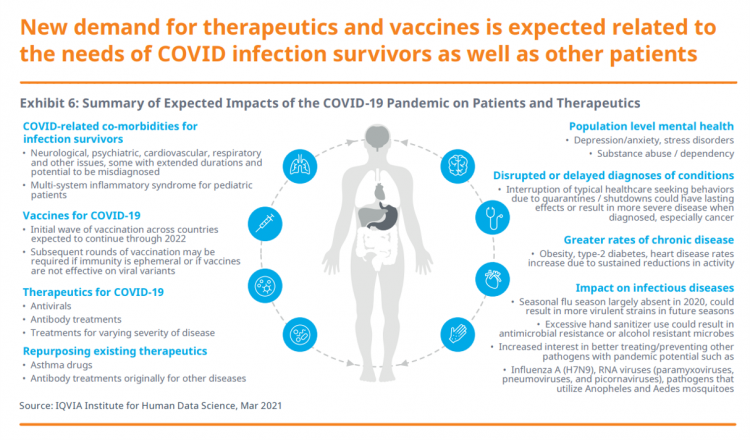
Spending on medicines, globally, will rebound this year and rise above pre-pandemic levels through 2025. Between 2021 and 2025, the annual growth global growth rate for prescription drugs spending is expected to range from 3% to 6%, a $1.6 trillion bill for the worlds’s total Rx medicines market. That relatively low single-digit growth rate is tempered by savings from biosimilars and the loss of brand exclusivity (that is, more generics coming to market). On the faster-growth side, we can expect two big therapeutic areas to drive spending upward: oncology and immunology, projected to expand by 9% to 12% each year
The Most Relevant Companies in Health Care – Learning from the W2O Group
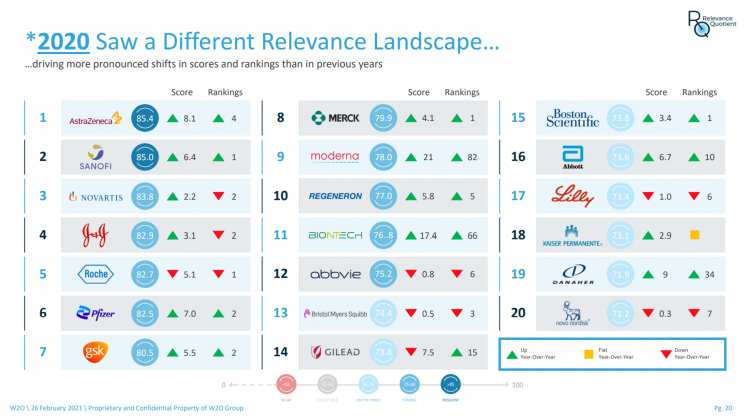
Five years ago, in 2016, the W2O Group said that, “Relevance is reputation.” That year the firm began to study the relevance of, well, relevance for organizations especially operating in the health/care ecosystem. 2020 changed everything, the W2O team asserts, now issuing its latest look into the issue through the Relevance Quotient. Relevance is built on recognizing, meeting and exceeding stakeholder expectations of organizations. In the Relevance Quotient methodology, W2O Group defines key stakeholders as employees, patients (including the sick and the well, caregivers, consumers, et al), health care providers, advocacy groups, analysts and investors, policy makers, journalists and media outlets.
The Remarkable Rise of Pharma’s Reputation in the Pandemic
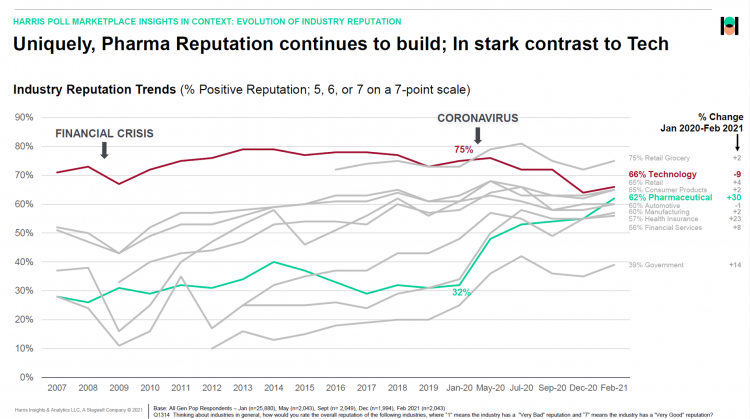
The reputation of the pharmaceutical industry gained a “whopping” 30 points between January 2020 and February 2021, based on the latest Harris Poll in their research into industries’ reputations. The study was written up by Beth Snyder Bulik in FiercePharma. Beth writes that, “a whopping two-thirds of Americans now offer a thumbs-up on pharma” as the title of her article, calling out the 30-point gain from 32% in January 2020 to 62% in February 2021. Thanks to Rob Jekielek, Managing Director of the Harris Poll, for sharing this graph with me for us to understand the details comparing pharma’s to
Ensuring That Humanity Retains Control of Connected Things: A Message from Microsoft at CES 2021

Artificial intelligence (AI) has begun to play a role in health care for predictive analytics, personalization, and public health. On 26th January, I’ll moderate a tweetchat at 1 pm Eastern time, brainstorming the current and future state of and opportunities for AI in health care. I’ll be co-chatting with Microsoft’s AI leader, Tom Lawry (@TCLawry on Twitter). In advance of that discussion, I wanted to feature remarks shared by Brad Smith, Microsoft President, that I recently heard at CES 2021, the annual (this year, virtual) meeting convening the largest community of consumer electronics stakeholders globally Smith wove a crucial, impactful
Our Homes Are Health Delivery Platforms – The New Home Health/Care at CES 2021
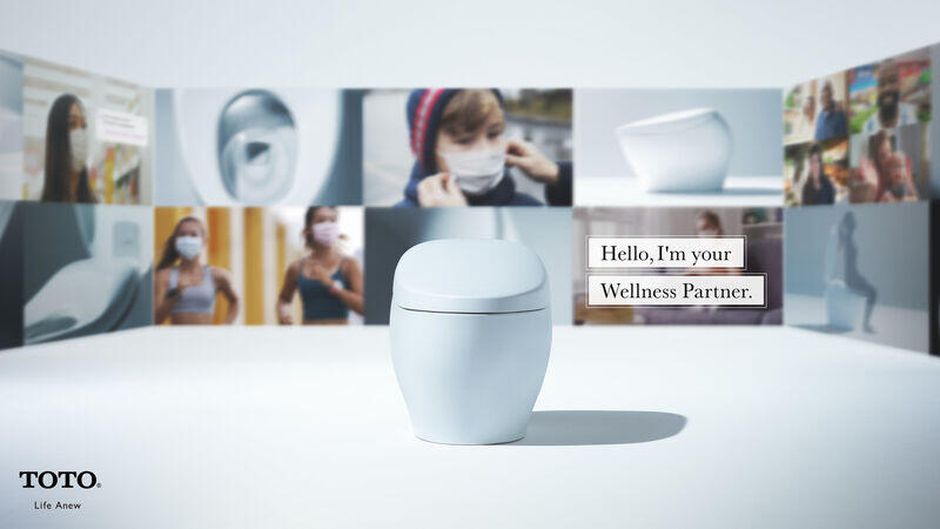
The coronavirus pandemic disrupted and re-shaped the annual CES across so many respects — the meeting of thousands making up the global consumer tech community “met” virtually, both keynote and education sessions were pre-recorded, and the lovely serendipity of learning and meeting new concepts and contacts wasn’t so straightforward. But for those of us working with and innovating solutions for health and health care, #CES2021 was baked with health goodness, in and beyond “digital health” categories. In my consumer-facing health care work, I’ve adopted the mantra that our homes are our health hubs. Reflecting on my many conversations during CES
Trust Plummets Around the World: The 2021 Edelman Trust Barometer in #CES2021 and Microsoft Context
Citizens around the world unite around the concept that Trust is Dead. This is no truer than in the U.S., where trust in every type of organization and expert has plummeted in the wake of the COVID-19 pandemic, political and social strife, and an economic downturn. Welcome to the sobering 2021 Edelman Trust Barometer, released this week as the world’s technology innovators and analysts are convening at CES 2021, and the annual JP Morgan Healthcare meetup virtually convened. As the World Economic Forum succinctly put the situation, “2020 was the year of two equally destructive viruses: the pandemic and the
Health Is Everywhere at #CES2021 – CTA’s CES 2021 Tech Trends to Watch
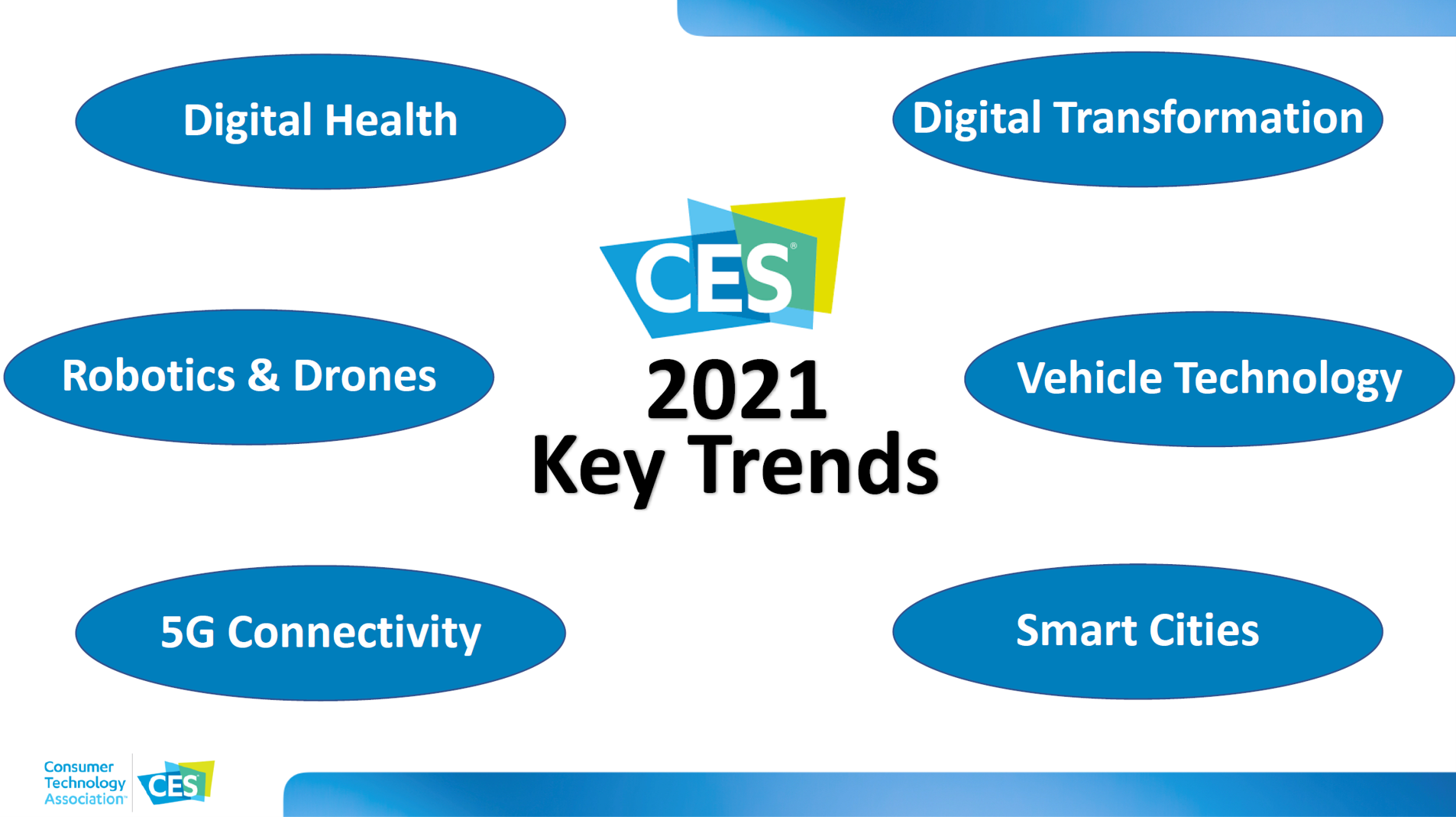
Spending on connected health monitoring devices in the U.S. will reach $845 million based on the forecast of the Consumer Technology Association, convening the annual 2021 CES this week in a virtual format. CTA unveiled the 2021 key trends we’ll see presented this week through the online exhibition hall and in educational sessions on the CES.Tech platform. Six major themes emerge at #CES2021: digital health, robotics and drones, 5G connectivity, vehicle technology, smart cities, and over all — digital transformation. All of these have applications in health and health care, especially accelerated in need by the COVID-19 pandemic which has
The 2021 Shkreli Awards: Lown Institute Counts Down the Top 10 Healthcare Industry Abuses in the Coronavirus Pandemic
The first year of the coronavirus pandemic in America was a kind of stress test on the U.S. health care system, revealing weak links and opportunities for bad behavior. “These are not just about individual instances or bad apples,” Dr. Vikas Saini, President of The Lown Institute, explained, referring to them as “cautionary tales” of the current state of U.S. health care. Dr. Saini and his colleague Shannon Brownlee released the annual Lown Institute 2020 Shkreli Awards this week, highlighting their ten most egregious examples of the worst events in U.S. health care that happened in the past year —
Will 2021 Be the Year of Sicker Americans? Pondering Late 2020 Data from IQVIA
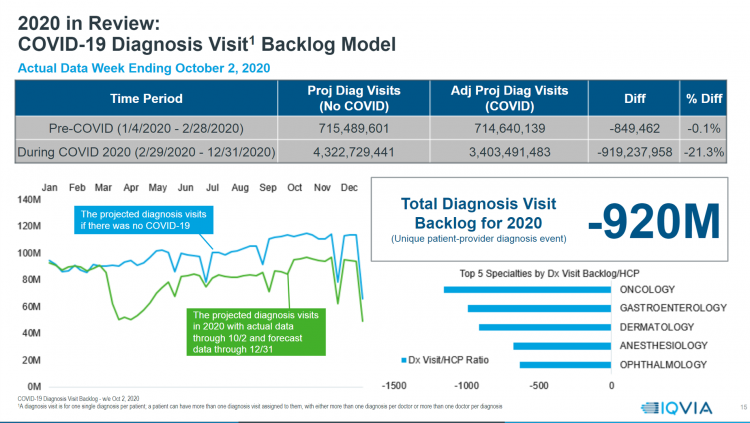
Yesterday, IQVIA presented their end-of-year data based on medical claims in the U.S. health care system tracking the ups, downs, and ups of the coronavirus in America. IQVIA has been tracking COVID-19 medical trends globally from early 2020. The plotline of patient encounters for vaccines, prescribed medicines, foregone procedures and diagnostic visits to doctors begs the question: in 2021, will Americans be “sicker,” discovering later-stage cancer diagnoses, higher levels of pain due to delayed hip procedures, and eroded quality of life due to leaky guts? Here are a few snapshots that paint a picture for greater morbidity and potentially more “excess
U.S. Health Consumers’ Growing Financial Pressures, From COVID to Cancer
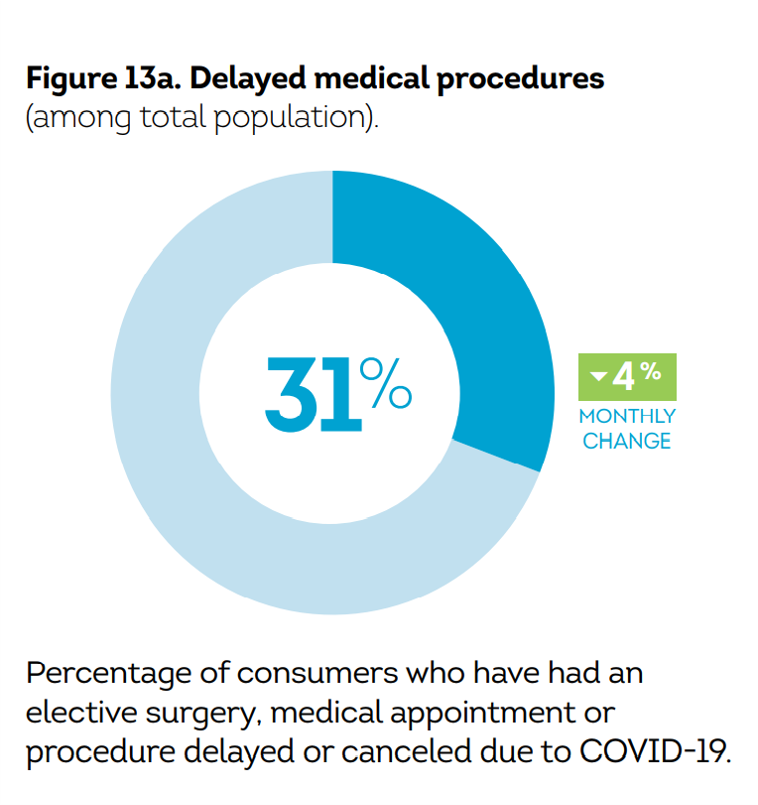
Before the coronavirus pandemic, patients had been transforming into health care payors, bearing high deductibles, greater out of pocket costs, and financial risk shifting to them for medical spending. In the wake of COVID-19, we see health consumers-as-payors impacted by the pandemic, as well as for existing diagnoses and chronic care management. There is weakening in U.S. consumers’ overall household finances, the latest report from the U.S. Bureau of Economic Analysis (BEA) asserted (published 25 November 2020). In John Leer’s look into the BEA report in Morning Consult, he wrote, “Decreases in income, the expiration of unemployment benefits and increased
Rebuilding Resilience, Trust, and Health – Deloitte’s Latest on Health Care and Sustainability
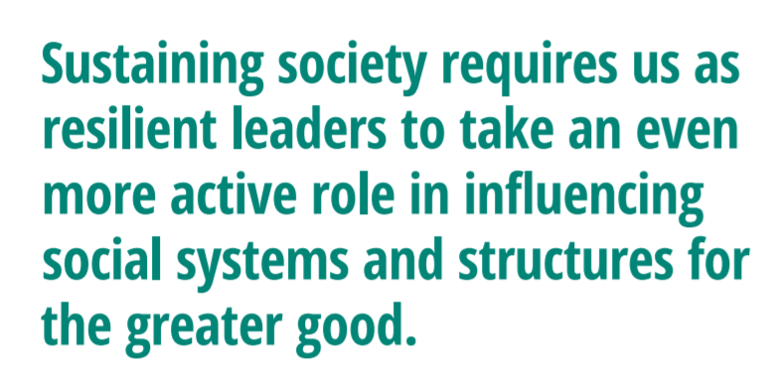
The COVID-19 pandemic has accelerated health care providers’ and plans’ investment in digital technologies while reducing capital spending on new physical assets, we learn in Building resilience during the COVID-19 pandemic and beyond from the Deloitte Center for Health Solutions. What must be built (or truly re-built), health care leaders believe, is first and foremost trust, followed by financial viability to ensure long-term resilience and sustainability — for the workforce, the organization, the community, and leaders themselves. For this report, Deloitte interviewed 60 health care chief financial officers to gauge their perspectives during the pandemic looking at the future of
The Coronavirus Pandemic Turbocharged Digital Health Investment in 2020
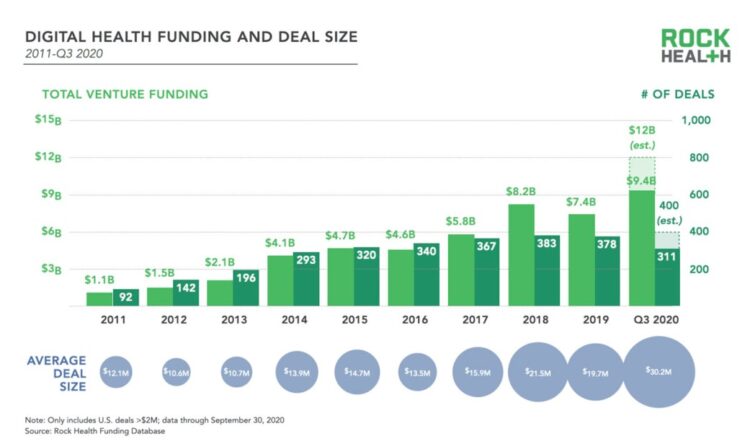
2020 will be remembered for disruption and dislocation on many fronts; among the major blips in the year will be it remembered as the largest funding year for digital health recorded, according to Rock Health’s report on the 3Q2020 digital health funding. This funding record (“already” before year-end, tallied by the third quarter as Rock Health notes) was driven by “mega”-deals accelerated during the public health crisis of COVID-19. In the third quarter of 2020, some $4 billion was invested in U.S. based digital health start-ups adding up $9.4 billion in 2020….so far. This is $1.2 billion more than two
Pharma’s Future Relevance Depends on Empathy, Messaging, Partnering, and Supporting Patients and Providers
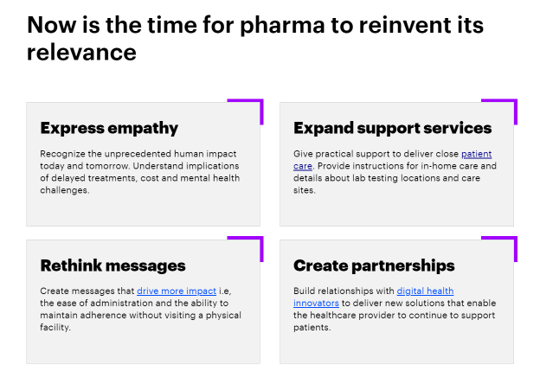
COVID-19 is re-shaping all industries, especially health care. And the pharma industry is challenged along with other health care sectors. In fact, the coronavirus crisis impacts on pharma are especially accelerated based on how the pandemic has affected health care providers, as seen through research from Accenture published in Reinventing Relevance: New Models for Pharma Engagement with Healthcare Providers in a COVID-19 World. For the study, Accenture surveyed 720 health care providers in general practice, oncology, immunology, and cardiology working in China, France, Japan, the United Kingdom, and the U.S., in May and June 2020. Top-line, Accenture points to four
My ABCovid-19 Journal, Day 2 of 5 – Letters “F” through “J”

Welcome to Day 2 of my #COVID19 holiday break, welcome to my ABCovid Journal, letters “F” through “J. If you hadn’t tuned into the Health Populi blog yesterday, 10th August 2020, you missed the first five letters of my Age of Corona alphabet, curated in my art journal created in the early weeks of the pandemic. Click the link to back-track and catch up with us… I should explain why I’m sharing this project in the Health Populi blog this week. Last month, long-time colleague and friend Colin Hung interviewed me on the #HITMC broadcast to discuss a lovely recognition
Americans Across Political Party Worry About Prescription Drug Prices – Especially to Deal with COVID-19
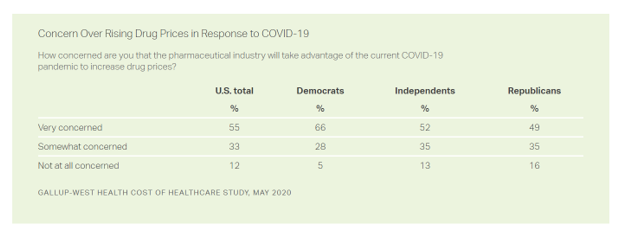
Nine in ten Americans is concerned about the price of prescription drugs in the wake of the coronavirus pandemic, Gallup and West Health found in their survey on the cost of healthcare, published today. A majority of people across political party share this concern: overall, 88% of U.S. adults are concerned about rising drug prices in response to COVID19, split across party ID with: 94% of Democrats, 86% of Independents, and 84% of Republicans. By demographics, more women than men are concerned about rising costs for the three health care spending categories the survey studied: drug prices, insurance premiums, and
Americans’ Concerns About the US Healthcare System Loom Larger Than Worries About Their Own Care
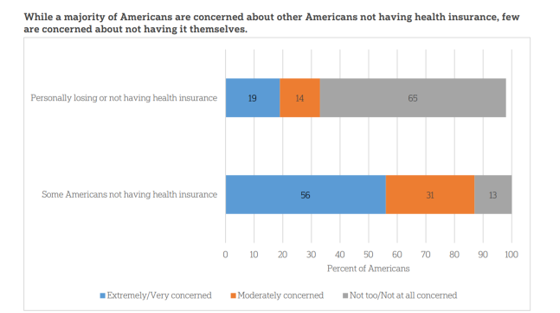
The coronavirus pandemic has further opened the kimono of the U.S. healthcare system to Americans: four months into the COVID-19 outbreak, most consumers (62%) of people in the U.S. are more concerned about other people not having access to high quality health care versus themselves. This is a 16 point increase in concern in May 2020 compared with the response to the same question asked in February in a poll conducted by the University of Chicago Harris School of Public Policy and The Associated Press-NORC Center for Public Affairs Research (the AP-NORC Center). The AP-NORC Poll found more of this
Why CTA’s Shepherding AI Is Important for Re-Imagining Healthcare

The Consumer Technology Association (CTA), collaborating with industry stakeholders, has ushered in a standard for artificial intelligence in health care. CTA is the membership organization for companies that innovate, manufacture and market consumer-facing tech like big-screen TVs, slick new autos, video games and voice assistants. So what’s an organization like CTA doing with AI and health care? Let me connect the dots. Check out this graphic taken from my book, HealthConsuming: From Health Consumer to Health Citizen. This shows the ten categories of tech I revisit each year at CES, CTA’s annual mega-conference of new-new things in consumer electronics
The State of the Union for Prescription Drug Prices
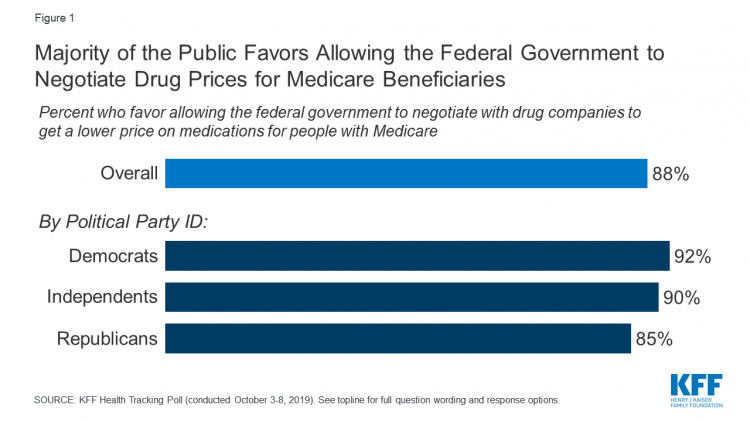
Tonight, President Trump will present his fourth annual State of the Union address. This morning we don’t have a transcript of the speech ahead of the event, but one topic remains high on U.S. voters’ priorities, across political party – prescription drug prices. Few issues unite U.S. voters in 2020 quite like supporting Medicare’s ability to negotiate drug prices with pharmaceutical companies, shown by the October 2019 Kaiser Family Foundation Health Tracking Poll. Whether Democrat, Independent, or Republican, most people living in America favor government intervention in regulating the cost of medicines in some way. In this poll, the top
Most Americans Are Curious and Hopeful About Genetics Research, But Privacy-Concerned
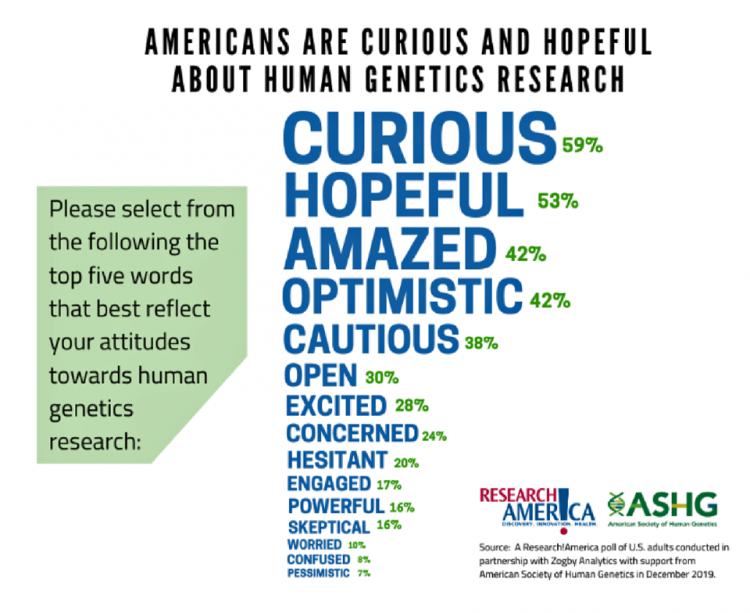
Most Americans associate more optimistic words with human genetics research than they do darker implications: “curious,” “hopeful,” “amazed.” and indeed “optimistic” ranked the top four impressions in peoples’ minds, based on a survey form the American Society of Human Genetics (ASHG). Below these perceptions are a few concerning concepts such as “cautious,” “concerned,” “hesitant, and “skeptical,” the poll found. Based on the relatively positive views on genetics research, most Americans support increasing Federal funding for that research: 74% said it was somewhat or very important to do so, compared with 15% saying it was not important. People value genetics research
Will Consumers Cross the Cost-and-Trust Chasm Between Prescription Drugs and Hospitals?
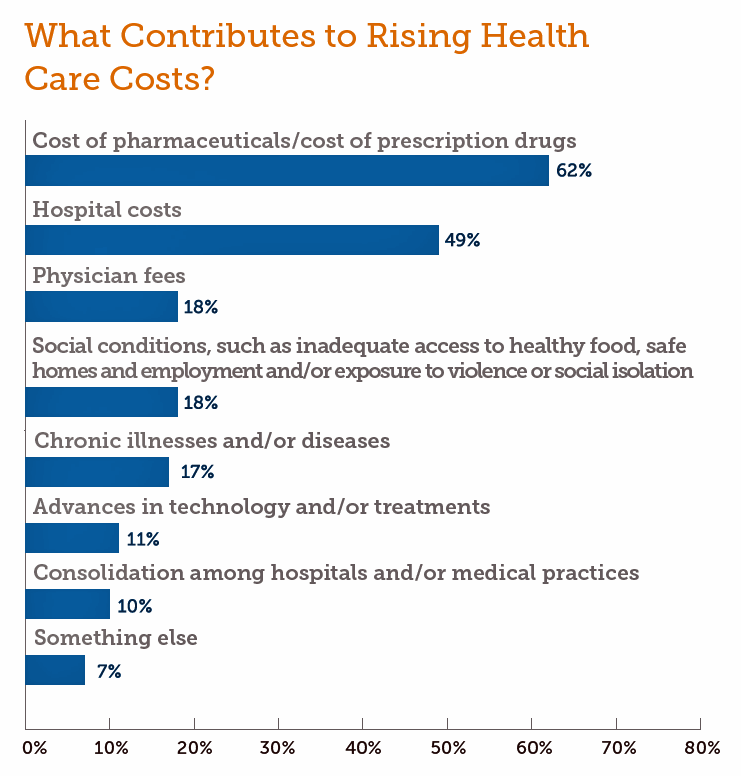
People in the U.S. rank prescription drugs, lab tests, emergency room visits, dental and vision care, preventive services, chronic disease management and mental health care as the “most essential” health care services, according to the 2019 Survey of America’s Patients conducted by The Physicians Foundation. When asked what factors contribute to rising health care costs in America, most consumers cite the cost of prescription drugs. Taken together, these two data points demonstrate the potent political import of prescription drug prices as the U.S. approaches the 2020 Presidential election. The Physicians Foundation surveyed 2,001 U.S. adults between 27 and 75 years
Making Health Care Better, from the N of 1 to the Public’s Health – Trend-Weaving Medecision Liberation 2019
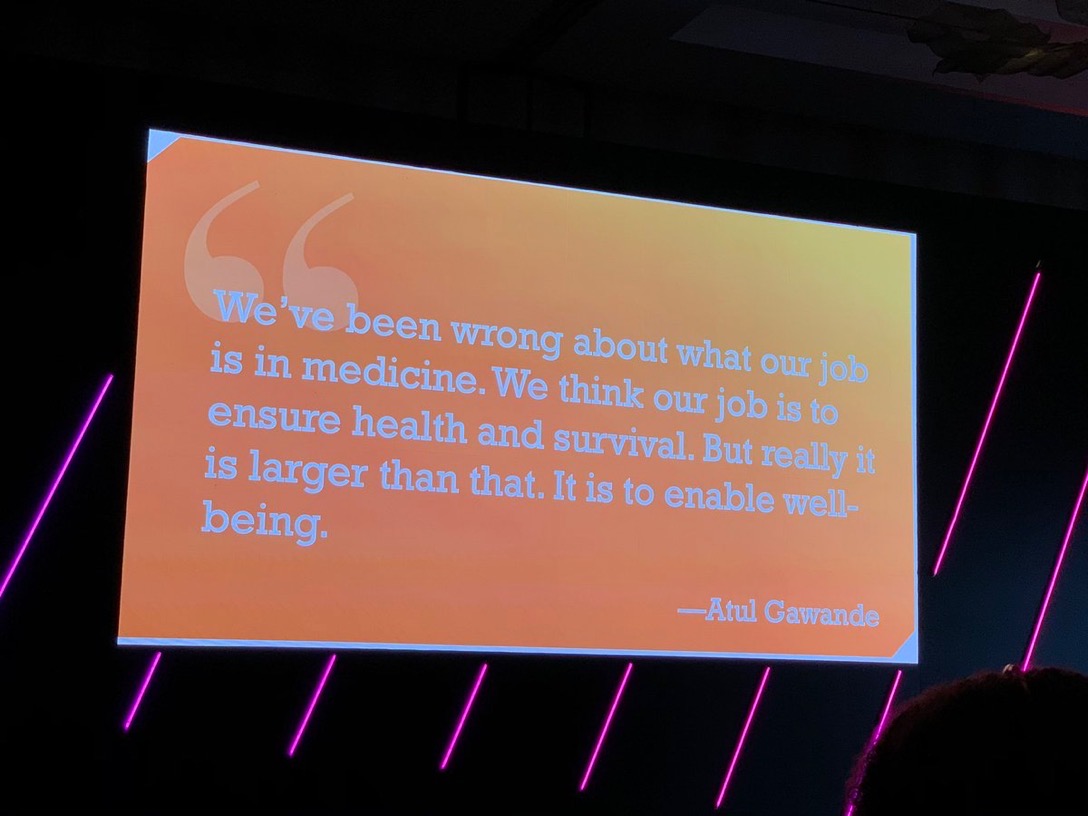
Health and our health information are deeply personal. Changing health care and inspiring positive health behaviors is hard to do. But we must and we will, a group of inspiring and inspired people who work across the health/care ecosystem affirmed this week in Dallas at the conference of Medecision Liberation 2019. I was engaged at this conference to wear several hats — as a keynote speaker, a sort of “emcee,” and, finally, to trend-weave the many talks and discussions happening throughout the meeting. This post is my synthesis of the summary I delivered live at the end of the conference,
Learning from Dr. Eric Topol, Live from Medecision Liberation 2019
“Bold thinking is great. Bold doing is better,” Dr. Eric Topol introduced his talk yesterday at Medecision’s Liberation 2019 conference. I have the opportunity, for which I’m so grateful, of not only attending this meeting but playing a role as a speaker, a sometimes stage “emcee,” and a keynote speaker. And as an attendee, I learn so much from other speakers, fellow attendees, and Medecision staff all sharing perspectives during breakouts and networking breaks. In mode of attendee (and self-confessed collegial-groupie of Dr. Topol’s), I took in his remarks taking notes as fast as I could thanks to Mom teaching
Celebrating “Labor Day” Welcoming Natalist to Our Health Ecosystem

There are many definitions of the word, “labor.” Oxford Dictionary provides context for the definition as follows: To work, as in especially hard physical work To make great effort (as in, “laboring from dawn to dusk”) To have difficulty in doing something despite working hard. For this third point, Oxford offers these synonyms: “strive, struggle, endeavor, try hard, do one’s best, do all one can, go all out, fight, push, be at pains, put oneself out.” And finally, one fourth contextual point: “A labor of love.” That is indeed the perfect framing this Labor Day week for my welcome to
The New Drug Companies Aren’t Drug Companies At All

The health/care ecosystem continues to morph as the stakeholder groups themselves are blurring across and outside of their core businesses. Today’s example of this is Clover Health, which launched Clover Therapeutics this week. This research organization will develop medicines targeting older adults — which makes sense because Clover Health’s target consumer market is Medicare Advantage beneficiaries. “Clover Therapeutics was created to address the significant unmet needs in chronic progressive diseases in the Medicare population,” Cheng Zhang, Head of Clover Therapeutics, is quoted in the press release. The company will first collaborate with Genentech (Roche) to research and develop therapies based
Most Americans Across Party ID Favor U.S. Government Negotiation to Lower Rx Drug Costs
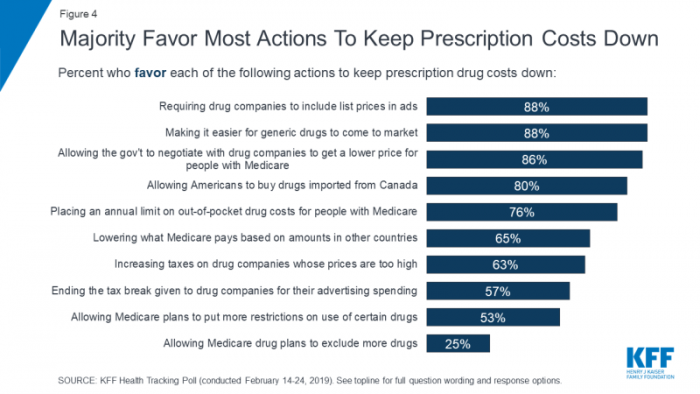
There’s little Americans, by political party, agree upon in 2019. One of the only issues bringing people together in the U.S. is prescription drug prices — that they’re too high, that the Federal government should negotiate to lower costs for Medicare enrollees, and that out-of-pocket costs for drugs should be limited. The Kaiser Family Foundation has been tracking this topic for a few years, and this month, their March 2019 Health Tracking Poll shows vast majorities of Democrats, Independents and Republicans all share these sentiments. It’s not that patients who take prescription drugs don’t appreciate them – most (58%) say medicines
Deep Human Interactions: The Antidote To More AI In Health Care – Learning From Philips’ CEO At HIMSS19
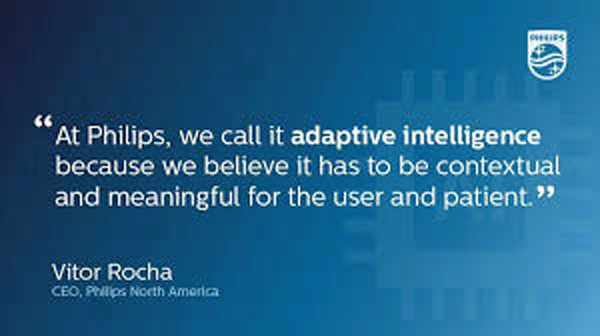
“The promise of AI is undeniable…could AI help clinicians deliver better and more humanistic care?” This question is asked and answered in a JAMA viewpoint published January 1/8 2019 titled, Humanizing Artificial Intelligence. This theme motivated a conversation held over a dinner convened by Philips hosted by Frans Van Houten this week at HIMSS19. To provide context Geoff Colvin, Fortune‘s Senior Editor, first talked about taking friction out of industries, as Lyft and Uber have done in the transport sector. “Taking friction out of industries challenges and changes business models,” Geoff noted. With Uber’s IPO valuation approaching $100 billion, I’d say that’s
The Venture Valkyrie’s Next AdVenture

Investor, advisor, operator, podcaster, blogger, speaker, Board member, mentor, mother, wife, volunteer. Take inventory of the many hats of Lisa Suennen, aka the Venture Valkyrie, and you understand why I see her as the Renaissance Woman of Healthcare. Ron Popeil couldn’t incorporate this many features into a contraption – yes, she slices and dices healthcare and technology, places bets on the best of them, and she deploys a whole lot more tools in her Mary Poppins-rich toolbox. Two months ago, Lisa announced she was leaving GE Ventures, where she was Senior Managing Director, to do something new. This week, she
Koen Kas, the Gardener of Health Tech Delights

The future of healthcare is not about being sick, Prof. Dr. Koen Kas believes. Having spent many years in life sciences in both research and as an entrepreneur, Koen now knows that getting and staying healthy isn’t about just developing medicines and med-tech: optimally, health requires a tincture of delight, Koen advises in his breakthrough, innovative book, Your Guide to Delight. Healthcare must go beyond traditional user-centered design, Koen’s experience has shown, and aspire toward design-to-delight. The concept of “delight” in healthcare, such as we experience in hospitality, grocery stores, and entertainment, is elusive. I’ve observed this, too, in my
Consumers Consider Cost When They Think About Medical Innovation
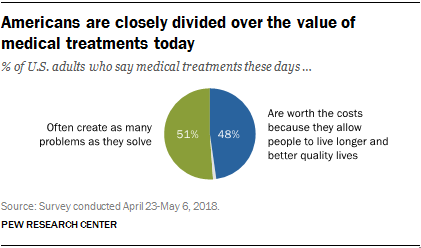
While the vast majority of Americans say that science has made life easier for most people, and especially for health care, people are split in questioning the financial cost and value of medical treatments, the Pew Research Center has found. The first chart illustrates the percent of Americans identifying various aspects of medical treatments as “big problems.” If you add in people who see these as “small problems,” 9 in 10 Americans say that all of these line items are “problems.” In the sample, two-thirds of respondents had seen a health care provider for an illness or medical condition in
How to Make Healthcare More Intelligent and Trustworthy: Accenture’s Digital Health Tech Vision 2018
“Do no harm” has been the professional and ethical mantra of physicians since the Hippocratic Oath was first uttered by medical students. The origins of that three-word objective probably came out of Hippocrates’ Corpus, which included a few additional words: “to do good or to do no harm.” The proliferation and evolution of digital technologies in health care have the potential to do good or harm, depending on their application. Doing good and abstaining from doing harm can engender trust between patients, providers, and other stakeholders in health. Trust has become a key currency in provider/patient/supplier relationships: 94% of health executives
The Gap Between the Trump Administration’s Promise of Reducing Rx Costs for Consumers and What People Really Want
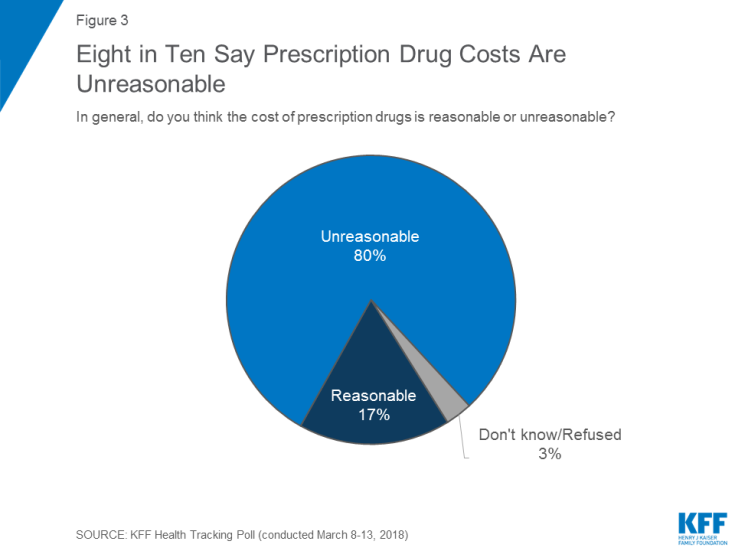
This is what happened to pharma stock prices on Friday after President Trump and Secretary of Health and Human Services Alex Azar outlined their new policies focusing on prescription drug prices. The graph is the Nasdaq U.S. Smart Pharmaceuticals Index (NQSSPH) from May 11, 2018, the date when POTUS and Secretary Azar made their announcement. What this upward driving curve indicates, from the start of stock trading in the morning until the ring of the closing bell, is that the pharma industry players, both manufacturers and PBMs, were quite delighted with what they heard. The blueprint for restructuring the prescription drug industry,
Americans’ Trust in the Healthcare System Low Compared to Rest-of-World’s Health Citizens
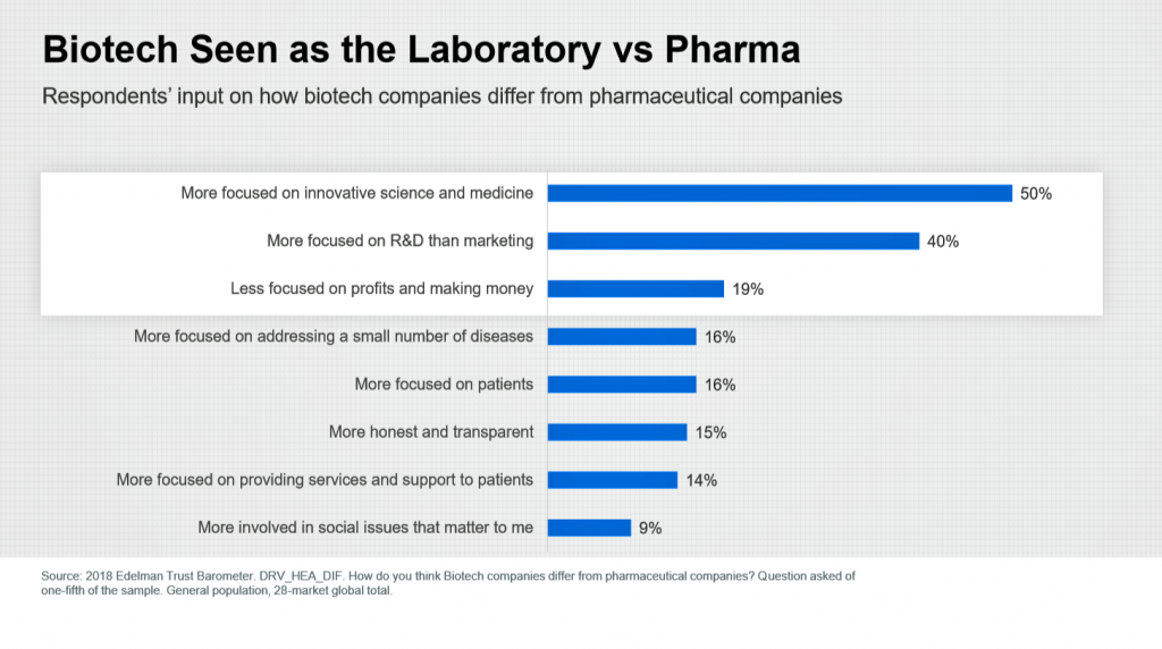
In the U.S., trust in the healthcare industry declined by 9 percentage points in just one year, declining from 62% of people trusting — that’s roughly two-thirds of Americans — down to 53% — closer to one-half of the population. I covered the launch of the 2018 Edelman Trust Barometer across all industries here in Health Populi in January 2018, when this year’s annual report was presented at the World Economic Forum in Davos as it is each year. The Edelman team shared this detailed data on the healthcare sector with me this week, for which I am grateful. Check
Global Drug Sales Forecasts Fall For Next Five Years
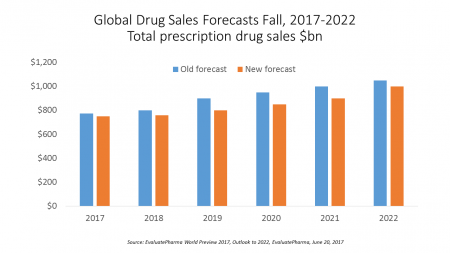
Total prescription drug sales have been trimmed, based on calculations of EvaluatePharma which forecasts a $390 bn drop in revenues between 2017 and 2022. “Political and public scrutiny over pricing of both new and old drugs is not going to go away,” EvaluatePharma called out in its report. The intense scrutiny on pharma industry pricing was fostered by Martin Shkreli in his pricing of Daraprim (taking a $13.50 product raising the price to $750), Harvoni and Sovaldi pricing for Hepatitis C therapies, and last year’s EpiPen pricing uproar. A May 2017 analysis of prescription drug costs by AARP judges that, “Nothing
Diet, Surgery and Pharmacy – The Pillars of Healthcare for 500 Years
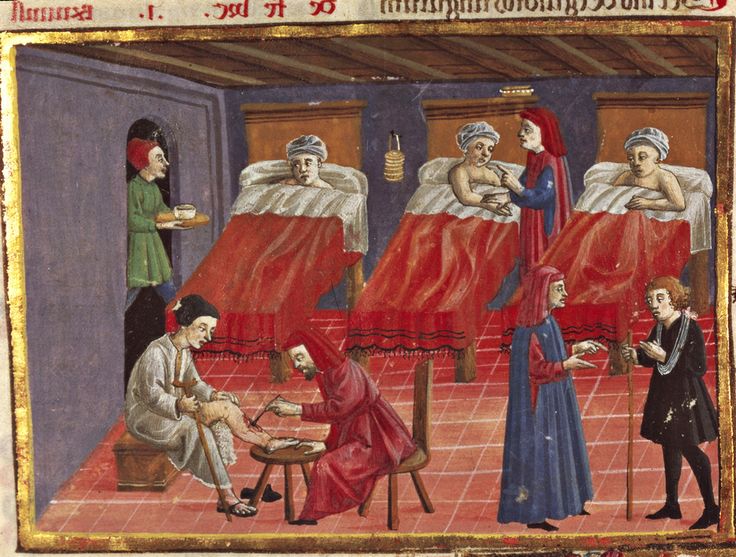
Healthcare was based on three pillars in 16th century Florence, Italy: diet, surgery, and pharmacy. Five centuries later, not much has changed in Italy or the U.S. But how healthcare gets funded and delivered in the context of these pillars significantly varies between the two countries, and impacts each nation’s health. To put this in context, visiting the Biblioteca Medicea Laurenziana (the Medici’s Laurentian Library) today in Florence was a trip through medical-surgical history, starting in the second half of the 16th century. The design of this magnificent library’s foyer and reading room was initially conceived by Michelangelo. The reading room
Pharma Industry Reputation Declines Second Year In A Row
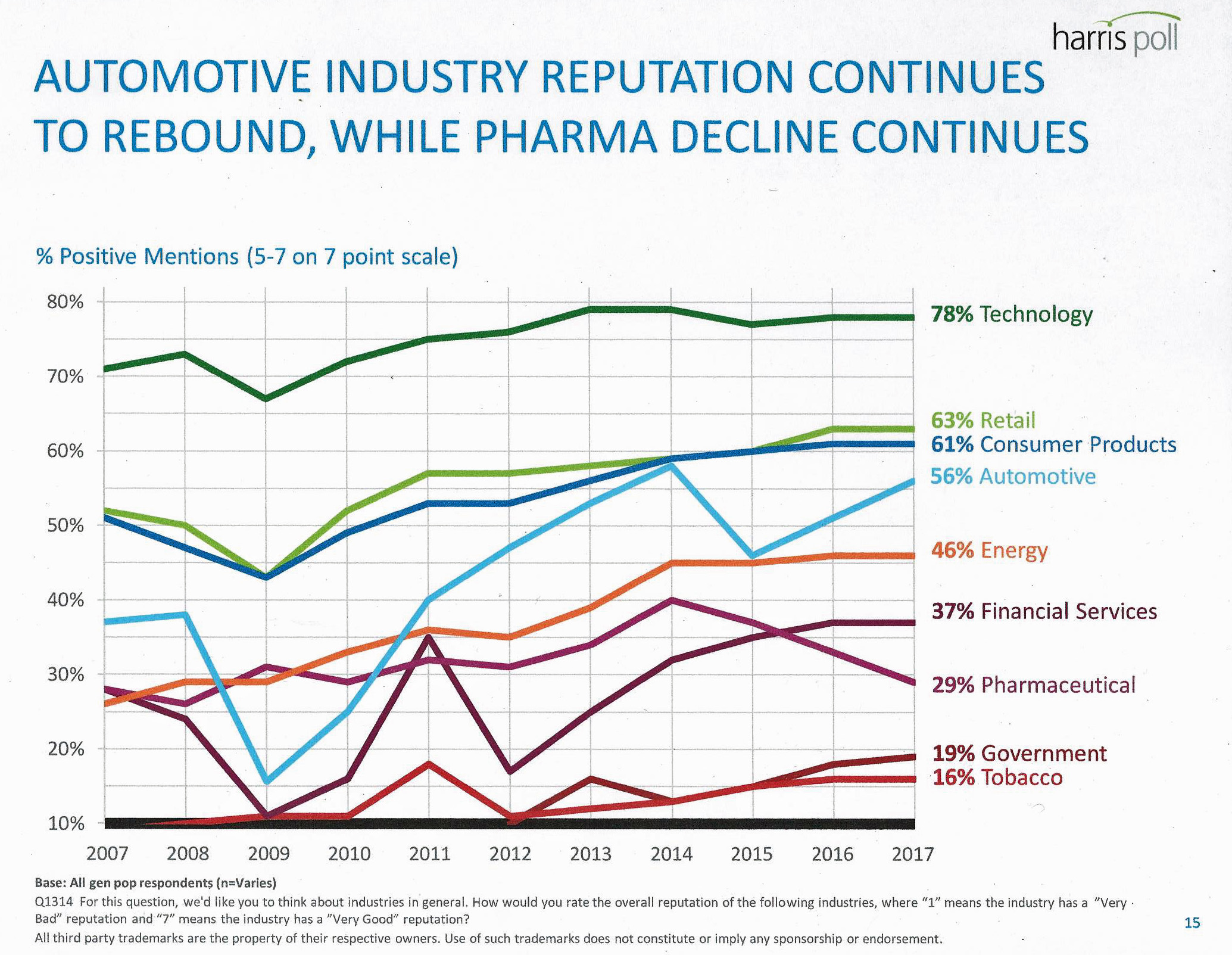
U.S. consumers love technology, retail, and consumer products; automotive company reputations are improving, even with Volkswagen’s emission scandal potentially tarnishing the industry segment. The only corporate sector whose reputation fell in 2016 was the pharmaceutical industry’s, according to the Harris Poll’s 2017 Reputation Quotient report. The line chart illustrates the decline of pharma’s reputation, which puts it on par with its consumer perceptions in 2010 — just before Medicare Part D was legislated and implemented, which improved pharma’s image among American health citizens (especially older patients who tend to be more frequent consumers of prescription drugs). Pharma’s reputation quotient is back
Marketing Medicines: Going Boldly and Accessibly for Rx

Over the past two weeks, we see two marketing campaigns emerge to market medicines: first, from the branded pharmaceutical association PhRMA, the #GoBoldly initiative with a theme of innovation and personalized medicine. Second, there’s a campaign from the Generic Pharmaceutical Association (GPhA), rebranding the organization as the Association for Accessible Medicines with the tagline, “keep medicines in reach.” What’s this all about? To put these marketing initiatives in context, let’s start with the publication of Express Scripts 2016 Drug Trend Report. “Drug trend” is short-hand for growth in prescription drug spending, year on year. The first graph illustrates the price index
A Growing Medicines Bill for Global Health Consumers to 2021
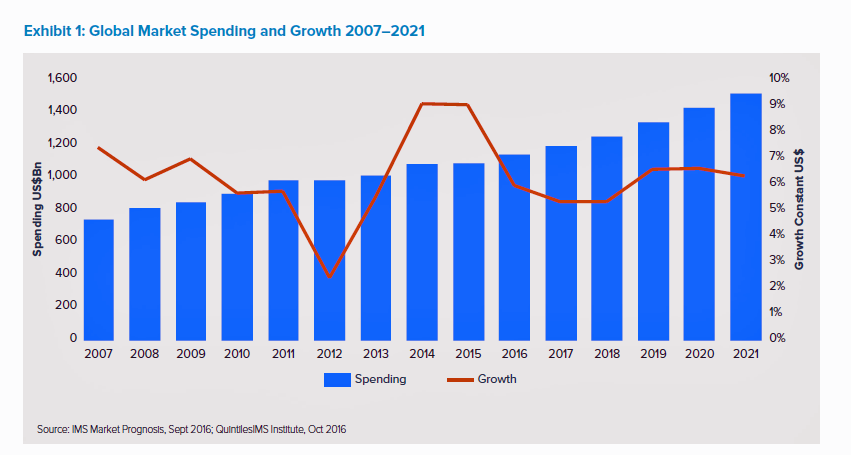
The global market for spending on medicines will high $1.5 trillion by 2021, according to the latest forecast from QuintilesIMS. Drug spending grew about 9% in the past two years, and is expected to moderate to 4 to 7 percent annually over the next five years. That dramatic 9% growth was heavily driven by new (expensive) specialty drugs to treat Hepatitis C (e.g., Harvoni and Sovaldi) and cancer therapies that hit the market in the past couple of years. There will be a “healthy level” of new innovative meds coming out of the drug pipeline in the next several years
PhRMA vs. Employers: Healthcare Costs In the Eye of the Beholder
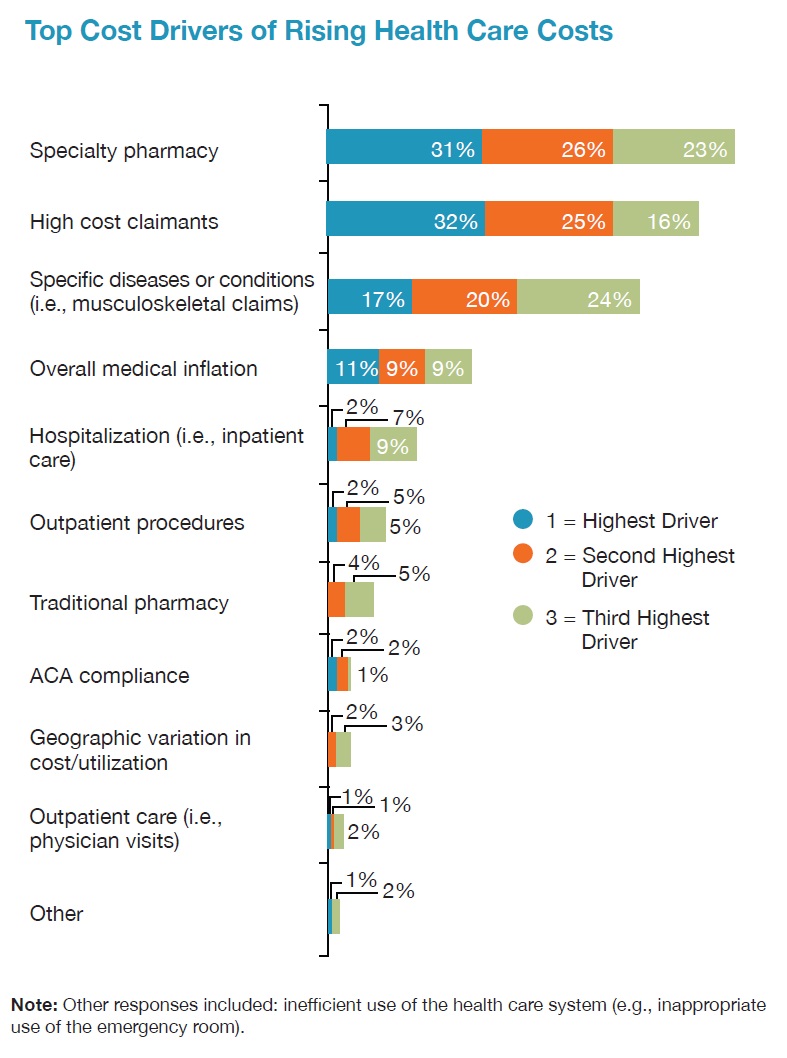
In the past week, the Pharmaceutical Research and Manufacturers of America (PhRMA), the advocacy organization for the branded prescription drug industry, published Medicines: Costs in Context,” the group’s lens on the value of prescription drugs in the larger healthcare economy. Their view: that prescription drug costs comprise a relatively low share of health care spending in America, and a high-value one at that. PhRMA contends that 10% of the health care dollar was allocated to prescription drugs in 2015, the same proportion as in 1960. “Even with new treatments for hepatitis C, high cholesterol and cancer, spending on retail prescription
Financial Toxicity: The High Cost of Cancer Drugs in the U.S.
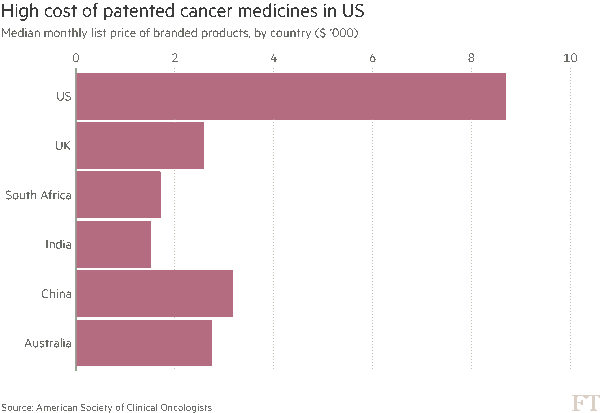
Two news items published in the past week point to the yin/yang of cancer survivorship and the high prices of cancer drugs. The good news: a record number of people in the US are surviving cancer, according to the American Cancer Society. That number is 15.5 million Americans, according to a study in the cancer journal CA. Note the demographics of cancer survivors: One-half are 70 years of age and older 56% were diagnosed in the past ten years, and one-third in the past 5 years Women were more likely to have had breast cancer (3.5 mm), uterine cancer (757,000),
Big and Bigger Pharma – Politics, Pricing and Patients
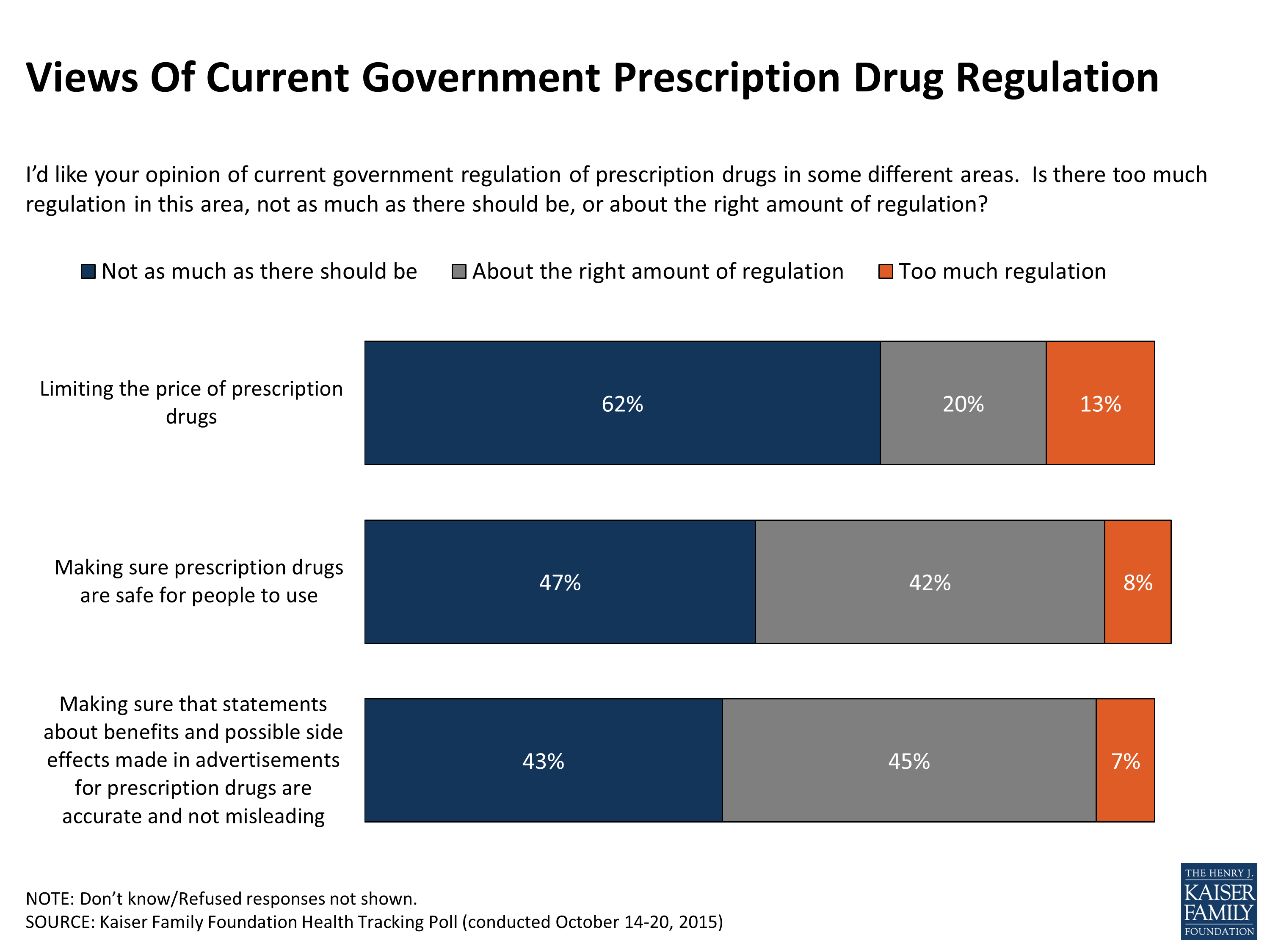
Pressures on the pharmaceutical industry are coming from every stakeholder touchpoint, driving companies to merge, set prices high for short-term gains, and (finally) put more resources toward providing patients services. Let’s call out just a few of the events from the past couple of weeks which, together, paint the current rocky landscape for pharma and life science companies: Last week on April 28th, termed “healthcare’s $45 billion day,” three big M&A deals hit the financial markets: Abbott sought to acquire St. Jude Medical (worth $30 bn alone), AbbVie looked to buy Stemcentrx for just under $6 bn, and Sanofi tagged
Expect Double-Digit Rx Cost Growth to 2020 – Implications for Oncology
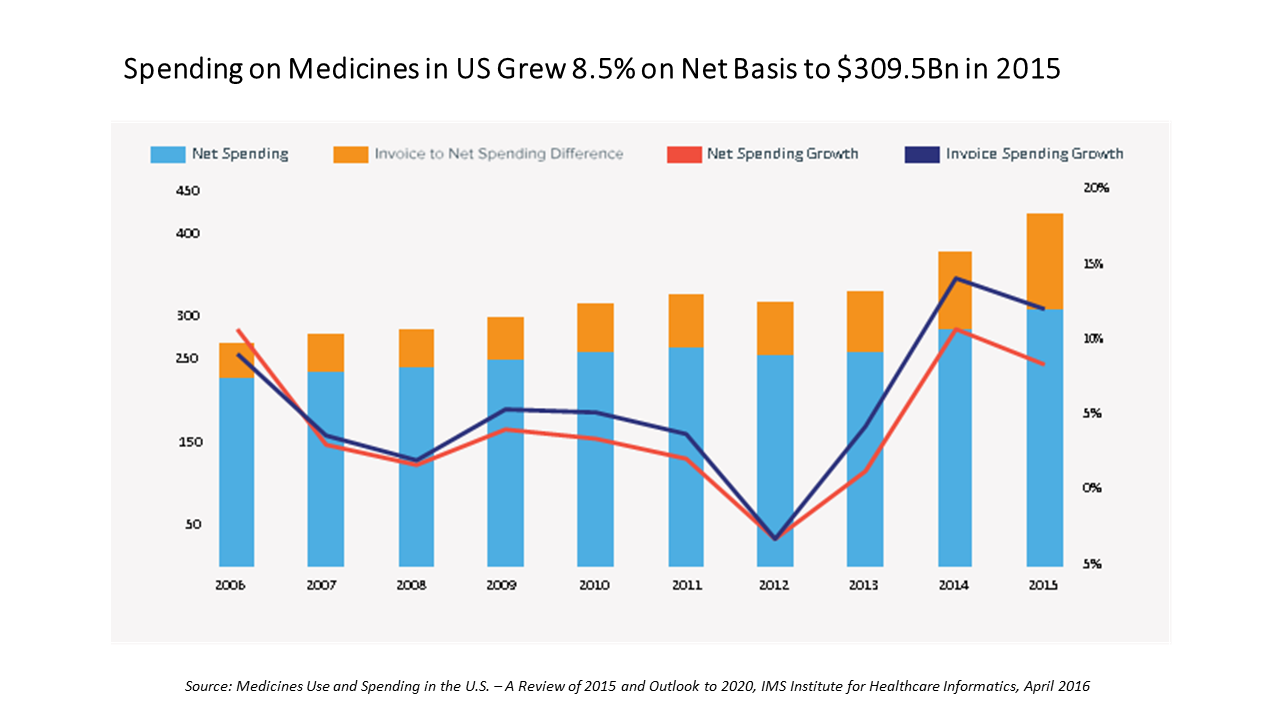
In the U.S., spending on prescription medicines reached $425 bn in 2015, a 12% increase over 2014. For context, that Rx spending comprised about 14% of the American healthcare spend (based on roughly $3 trillion reported in the National Health Expenditure Accounts in 2014). We can expect double-digit prescription drug cost growth over the next five years, according to forecasts in Medicines Use and Spending in the U.S. – A Review of 2015 and Outlook to 2020 from IMS Institute of Healthcare Informatics. The biggest cost growth driver is specialty medicines, which accounted for $151 bn of the total Rx spend
The Rise and Rise of (Specialty) Prescription Drug Prices
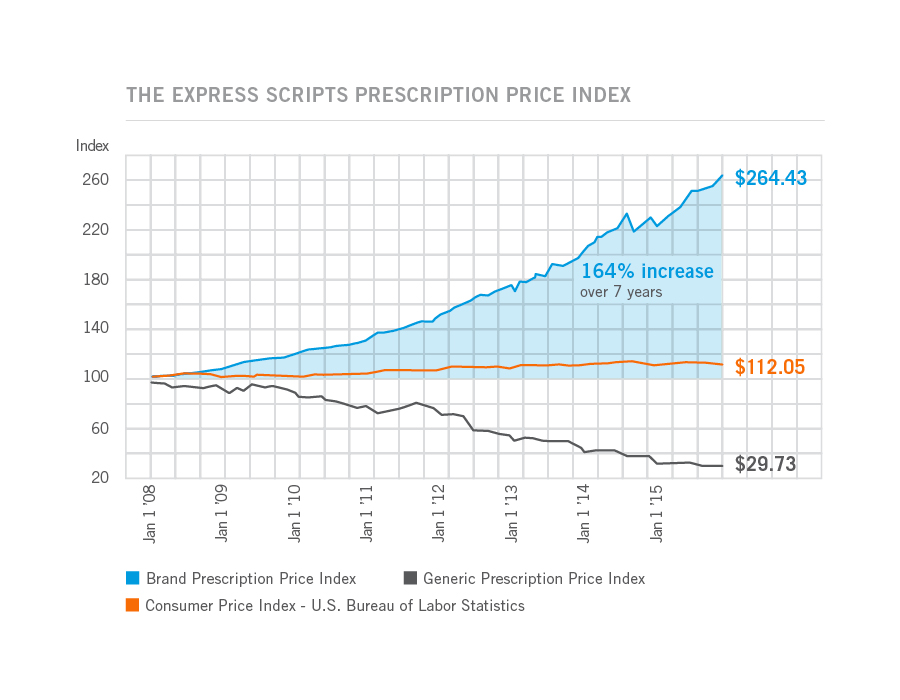
Prices for the most commonly used branded prescription drugs grew from a base index of $100 in 2008 to to $264 in 2015, based on the Express Scripts 2015 Drug Trend Report. This is illustrated by the upwardly-sloping blue line in the chart. In contrast, the market basket of the most commonly used generic drugs fell from the $100 index in 2008 to $29.73, shown by the declining black line in the graph. The $112.05 is calculated from a market basket of commonly purchased household goods which cost $100 in 2008, a relatively flat line which puts the 264% rise in
Prescription Drug Costs Will Be In Health Benefits Bullseye in 2016
Prescription drug costs have become a front-and-center health benefits cost issue for U.S. employers in 2015, and in 2016 the challenge will be directly addressed through more aggressive utilization management (such as step therapy and prior authorization), tools to enable prescription intentions like DUR, and targeting fraud, waste and abuse. Consumers, too, will be more financially responsible for cost-sharing prescription drugs, in terms of deductibles and annual out-of-pocket limits, as described in the PBMI 2015-206 Prescription Drug Benefit Cost and Plan Design Report, sponsored by Takeda. The Pharmacy Benefit Management Institute has published this report for 15 years, which provides neutral, detailed survey
U.S. Consumers’ View of Pharma Goes Negative in 2015
Americans’ views of the pharmaceutical industry have fallen in the past year, with negative perceptions outweighing positive ones, shown in the line graph from the Gallup Poll. Pharma’s low-lying reputation among consumers sits among others including the legal field, healthcare, oil and gas, and the Federal government which ranked lowest across all 25 sectors Gallup analyzed. Gallup surveyed 1,011 U.S. adults in in the first week of August 2015 via telephone. Since 2003, Gallup notes, the pharma industry has consistently ranked in the bottom third of industries operating in the U.S. Pharma respect is in the eye of the consumer-beholder
Collaboration in health/care drives value – in & beyond bio/pharma
“Tomorrow [drug makers] may not get paid for the molecule, they may only get paid for the outcome,” expects Brian Niznik of Qualcomm Life. He’s quoted in a report from PwC’s Health Research Institute, 21st Century Pharmaceutical Collaboration: The Value Convergence. What Brian’s comment recognizes is the growing value-based environment for healthcare, which couples purchasers driving down drug costs via discounts and stringent formulary (approved drug list) contracts, and growing patient responsibility for paying for prescription drugs — especially financially costly for specialty drugs that are new-new molecules. But as Brian points out, if the high-cost molecule doesn’t perform as
Doctors who write right: Gawande, Topol and Wachter put people at the center of health/care
There’s a trifecta of books written by three brilliant doctors that, together, provide a roadmap for the 21st century continuum of health care: The Patient Will See You Now by Eric Topol, MD; The Digital Doctor from Robert Wachter, MD; and, Being Mortal, by Atul Gawande. Each book’s take provides a lens, through the eyes of a hands-on healthcare provider, on healthcare delivery today (the good, the warts and all) and solutions based on their unique points-of-view. This triple-review will move, purposefully, from the digitally, technology optimistic “Gutenberg moment” for democratizing medicine per Dr. Topol, to the end-game importance of
Specialty pharmaceuticals’ costs in the health economic bulls-eye
This past weekend, 60 Minutes’ Leslie Stahl asked John Castellani, the president of PhRMA, the pharmaceutical industry’s advocacy (lobby) organization, why the cost of Gleevec, from Novartis, dramatically increased over the 13 years it’s been in the market, while other more expensive competitors have been launched in the period. (Here is the FDA’s announcement of the Gleevec approval from 2001). Mr. Castellani said he couldn’t respond to specific drug company’s pricing strategies, but in general, these products are “worth it.” Here is the entire transcript of the 60 Minutes’ piece. Today, Health Affairs, the policy journal, is hosting a discussion
Dr Eric Topol on the digital democratization of health care
Moore’s Law is coming to medicine. And it will look and feel a lot like Uber: with rich technology underpinning, consumer-service oriented and friendly, and shaking up the professionals at the front line of the business (from taxi drivers to physicians). Eric Topol, physician and editor-in-chief at Medscape, told a standing-room-only audience at the kickoff of the 8th annual Health 2.0 Conference that the democratization of health care is coming based on consumers’ use of eight drivers: sensors, labs, imaging, physical exams, access to medical records, transparency of costs, and digital pills. Dr. Topol referred to the cover ot TIME
Practice Fusion joins the open health data community with Insight
Open data is a growing trend in health care. Analyzing data sets across lots and lots of people can help researchers identify medical cures, anticipate epidemics, and solve knotty problems where social and behavioral issues complicate clinical questions and solutions. Joining the open health data community is the health IT company Practice Fusion, which is sharing with the public aggregated data on some 81 million patients collected through over 100,000 active users every month recording patient data in the company’s cloud-based electronic health records system. Insight, the searchable database, is freely available to people, researchers, policymakers, and anyone who wants to look at top line
Pharma warming up to the cloud to drive efficiencies and support analytics
Over the next few years, large global pharma companies will need to wring out an additional $35 billion worth of efficiencies in order to drive profitability. While the industry has most of the patent cliff challenge behind it, companies face price constraints with respect to health reform, static national economies, and access demands. As the pharmaceutical industry enters the value-based health care era, the industry must catch up with other vertical markets in adopting information technology. In particular, pharma has been slower to migrate to the cloud than other businesses, with concerns about security and health care particular needs. Today, the
Digital health is hot at South-by-Southwest #SXSH
Today kicked off the 2014 South-by-Southwest Festival (#SXSW) in Austin, TX, running until March 16 and featuring dozens of sessions, concerts, video, and fireside chats in music, film and interactive segments. I’ll be involved in an interactive session on Tuesday called “The Digital Health Bubble – Is It About to Burst?” This panel includes Marc Monseau (@MDMonseau) who is a pioneer in health and social media (building J&J’s early leadership in social health online); Marco Smit (@MrHealth20) who leads Health 2.0 Advisors and is a veteran strategist in several health/tech companies; and, Robert Stern, Founder/CEO of @PointofCare, a health IT platform that
When health care costs are a side effect
4 in 5 U.S. patients – 81% of them – want an equal say in health care decisions with their care provider, according to a 2013 Institute of Medicine study. At the same time, patients choose to take “drug holidays,” opting out of taking three or more doses of medicines in a row, or adopt “trail mix” approaches to taking prescriptions, casually and inappropriately mixing Rx drugs. Welcome to your world, pharma industry: where people say they want control, but somehow don’t exercise it in the way you — drug companies — define as “compliance” or “adherence.” Customer experience in
Getting to health engagement will require more than a patient portal
Patient and health engagement is the flavor du jour in health circles these days, from the corridors of hospitals to the caffeinated marketing meetings in Big Pharma’s east coast meet-ups. But there’s no standard agreement on what we mean by peoples’ health engagement, whether by patient or well consumer. In Market Insights: The Evolution of Consumer Engagement in Health Care, Porter Research endeavors to deepen our understanding of this important concept. In the introductory section of the paper, “Understanding Engagement,” Porter proffers that industry – providers, payers and employers – consider engagement as “changing consumer behavior through increased participation in consumers’ own health
Delaying aging to bend the cost-curve: balancing individual life with societal costs
Can we age more slowly? And if so, what impact would senescence — delaying aging — have on health care costs on the U.S. economy? In addition to reclaiming $7.1 trillion over 50 years, we’d add an additional 2.2 years to life expectancy (with good quality of life). This is the calculation derived in Substantial Health And Economic Returns From Delayed Aging May Warrant A New Focus For Medical Research, published in the October 2013 issue of Health Affairs. The chart graphs changes in Medicare and Medicaid spending in 3 scenarios modeled in the study: when aging is delayed, more people qualify
People not up-close-and-personal about personalized medicine…yet
Only 1 in 4 U.S. adults over 30 know what “personalized medicine” (PM) really is, and only 8% of people feel very knowledgeable about the concept based on Consumer Perspectives on Personalized Medicine from GfK, published online in August 2013. GfK surveyed 602 online adults 30 years and over between February and March 2013 drawn from the company’s KnowledgePanel sample of U.S. adults. Only 4% of people who have heard of personalized medicine describe it accurately as “medicine based on genome/genetic make up.” About one-half of people (52%) defined PM as medical care, treatment, or medicine geared toward individual needs. The poll
The decline and fall of pharmaceutical spending…short- or long-term phenomenon?
The prescription drug cost curve is bending…for the time being. Spending on medicines fell by 3.5% in 2012 and will continue to fall below overall health spending over the next five years to 2017. But different from general health spending, there’s a new game in town called specialty medicines, and they cost a whole lot more than the generics and the aging brands that bent the cost curve in 2012. The declining Rx spending story is only part of a complicated tale told in great detail in a comprehensive report from the IMS Institute for Healthcare Informatics, Declining Medicine Use
FDA goes DTP(atient)
The Food & Drug Administration (FDA) launched its new website for and about patients, the Patient Network, with the tagline, “Bringing your voice to drug and device approval and safety.” With this move, the FDA moves toward social health, someplace where at least one-third of U.S. consumers already opine, shop, share personal info, crowdsource cures, and support each other on all-matters-health-and-illness. The objective of the Patient Network is, “to help FDA help patients have a bigger voice.” Dr. Margaret Hamburg, the Commissioner of the FDA, talks about the concept here. The rationale? “When patients better understand the intricacies of how
1 in 5 US consumers asks a doctor for a lower-cost Rx
With U.S. health consumers spending $45 billion out-of-pocket for prescription drugs in 2011, pharmaceutical products are morphing into retail health products. As such, as they do with any other consumer good, consumers can vote with their feet by walking away from a product purchase or making the spend based on the price of the product and its attributes, along with whether there are substitutes available in the marketplace. When it comes to prescription drugs, it’s not as clear-cut, according to the Centers for Disease Control‘s analysis of data from the 2011 National Health Interview Survey titled Strategies Used by
The value of big data in health care = $450 billion
Exploiting Big Data in industry is Big News these days, and nowhere is the potential for leveraging the concept greater than in health care. McKinsey & Company estimates that harnessing big data across five dimensions of health care could yield nearly one-half trillion dollars’ worth of value in The ‘big data’ revolution in healthcare. The chart summarizes McKinsey’s calculations on the value of Big Data in health care at its maximum. Before digging into the value potential, just what is Big Data in health care? Statistics and information are generated in the health care system about patients: say, during visits
Eric Topol creatively destroys medicine at #HIMSS13
Wearing his Walking Gallery jacket painted by (im)patient advocate, Regina Holliday, Dr. Eric Topol evangelized the benefits of digital medicine and consumer empowerment in health care, largely summarizing his epic (pun intended – wait for Hot Point, below) book, The Creative Destruction of Medicine. A founder of the West Wireless Health Institute (now known as West Health), Dr. Topol is a physician and researcher at Scripps and was recently named as editor at Medscape. A new piece of Topol Trivia for me is that GQ magazine called him a rock star of science. Dr. Topol is one of the more
Wired health: living by numbers – a review of the event
Wired magazine, longtime evangelist for all-things-tech, has played a growing role in serving up health-tech content over the past several years, especially through the work of Thomas Goetz. This month, Wired featured an informative section on living by numbers — the theme of a new Wired conference held 15-16 October 2012 in New York City. This feels like the week of digital health on the east coast of the U.S.: several major meetings have convened that highlight the role of technology — especially, the Internet, mobile platforms, and Big Data — on health. Among the meetings were the NYeC Digital Health conference, Digital
Growing demand for customer service…from Pharma
1 in 3 online consumers (36%) is interested in receiving customer service from the pharmaceutical industry. In particular, these engaged health consumers want contact, first and foremost, with a clinical expert associated with a pharmaceutical company: namely, a doctor or a nurse. In third place would be a patient advocate representing the pharmaceutical company. During the recording of a podcast this week hosted by Med Ad News‘s managing editor Josh Slatko, featuring Monique Levy, VP of Research at Manhattan Research, Adam Budish, SVP of Sales with Epocrates, and me, Monique mentioned this data point from the latest ePharma Consumer study conducted by
Converging for health care: how collaborating is breaking down silos to achieve the Triple Aim
On Tuesday, 9 July 2012, health industry stakeholders are convening in Philadelphia for the first CONVERGE conference, seeking to ignite conversation across siloed organizations to solve seemingly intractable problems in health care, together. Why “converge?” Because suppliers, providers, payers, health plans, and consumers have been fragmented for far too long based on arcane incentives that cause the U.S. health system to be stuck in a Rube Goldbergian knot of inefficiency, ineffectiveness and fragmentation of access….not to mention cost increases leading us to devote nearly one-fifth of national GDP on health care at a cost of nearly $3 trillion…and going up.
Improving health care through Big Data: a meeting of the minds at SAS
Some 500 data analytics gurus representing the health care ecosystem including hospitals, physician practices, life science companies, academia and consulting came together on the lush campus of SAS in Cary, North Carolina, this week to discuss how Big Data could solve health care’s Triple Aim, as coined by keynote speaker Dr. Donald Berwick: improve the care experience, improve health outcomes, and reduce costs. Before Dr. Berwick, appointed as President Obama’s first head of the Centers for Medicare & Medicaid Services, Clayton Christensen of the Harvard Business School, godfather of the theory of disruptive innovation in business, spokee about his journey
What the FDA needs to know about Rx health consumers: most Americans see value in pharma-sponsored health social networks
In PwC‘s landmark report, Social Media “Likes” Healthcare, there’s a data point obscured by lots of great information generated by the firm’s survey of 1,060 U.S. adults: that over one-half of people value patient support groups and social networks with other patients that are offered by drug companies. Not surprisingly, U.S. consumers. who are taking on increasing financial responsibility to pay for health care products and services, also highly value discounts and coupons, and access to information that helps them find the “cheapest” medications — both favored by two-thirds of people. The report found, overall, that over one-third of U.S. adults
Job #1 in data analytics for health care: get the data, and make sure you can trust it
The ability to get the data is the #1 obstacle that will slow the adoption of data analytics in health care, according to IBM’s report, The value of analytics in healthcare: from insights to outcomes. Healthcare “high performers,” as IBM calls them, use data analytics for guiding future strategy, product research and development, and sales and marketing functions. 90% of healthcare CIOs told IBM that developing “insight and intelligence” were key focuses of their organizations over the next 3 to 5 years. Underneath this macro objective are 3 business goals that data analytics addresses in healthcare: to improve clinical effectiveness
Happy birthday, dear Watson: what the 1st anniversary means for health care today, and in future
IBM is celebrating the first birthday of Watson this week. I had the opportunity to brainstorm some of the short- and long-term meanings of Watson in health care this week at HIMSS 2012 in Las Vegas. When most people think of Watson, an image of the Jeopardy! game featuring the technology versus the legendary player Ken Jennings comes to mind. However, Watson has the potential to play a transformational role in health care, globally – for population health, and for the patient N=1. Watson is a supercomputer’s supercomputer: underneath the formidable hood are dozens of programs that enable Watson to
Moving from operational efficiency to personalized healthcare value – IBM on redefining success in healthcare
A health system that’s built to last: this is the latest sound-bite echoing through health policy circles. The theme of sustainability is permeating all matters of policy, from education and business to health care. Enter IBM, with a rigorous approach to Redefining Value and Success in Healthcare: Charting the path to the future, from the group’s Healthcare and Life Sciences thinkers. What’s inspiring about this report is the team’s integrative thinking, bridging the relationship between operational effectiveness built on a robust information infrastructure that enables team-based care (the “collaboration” aspect in the middle of the pyramid), which then drive personalized healthcare
Prescription drug spend in 2012: moving from “educating” patients to empowering them
The growth in prescription drug costs covered by employers and Rx plan sponsors are driving them to adopt a long list of utilization management and price-tiering strategies looking to 2012, according to the 2011-2012 Prescription Drug Benefit Cost and Plan Design Report, sponsored by Takeda Pharmaceuticals. The average drug trend for 2011 — that is, the average annual percentage increase in drug cost spending — was 5.5%, 1.5 percentage points greater than general price inflation of about 4%. The generic fill rate was 73% of prescription drugs purchased at retail. While drug price inflation is expected to increase in 2012, plan
Patients feel out of the Rx drug development process: why participatory health in pharma is important
“Value” in prescription drugs is first and foremost about outcomes, in the eyes of physicians and biopharma. For managed care, “value” is first about safety, then patient outcomes. However, although one-third of patients managing a chronic condition cannot define “value” in health care, 9 in 10 say that prescription drugs are “valuable” to their health and wellbeing. In fact, 80% say that the money they spend on prescription medications is “worth it.” Yet patients feel largely out of the prescription drug development process. These findings come from Quintiles research report, The 2011 New Health Report, subtitled: exploring perceptions of value and collaborative relationships among
Don’t assume generics will stop drug cost trends in 2012 and beyond: specialty drugs will drive growing Rx spending
In the 2011 Medco Drug Trend Report, there’s good news and bad news depending on the lens you wear as a health care stakeholder in the U.S. On the positive side of the ledger, for consumers, payers and health plan sponsors, drug trend in 2010 stayed fairly flat at 3.7% growth. That’s due in major part to the increasing roster of generic drugs taking the place of aging branded prescriptions products. More than $100 billion (with a ‘b’) worth of branded drugs will go off-patent between 2010 and 2020, and the generic dispensing rate could reach 85% by 2020, Medco
Patient perspectives should be part of evidence-based medicine, Dr. Weil et al say
Randomized controlled trials (RCTs) have been the rational cornerstone of medical decision making for decades. RCTs demonstrate a drug or therapeutic course’s efficacy – that is, the extent to which a specific intervention, procedure, or regimen produces a beneficial result under ideal conditions. Of course, how a particular therapy works in an individual is highly personalized based not only on a body’s biochemistry, but personal preferences, perceptions, and personality. That’s why Dr. Andrew Weil and his colleagues, Dr. Scott Shannon and Dr. Bonnie Kaplan, say that medical decision making should take into account the patient perspective. In Medical Decision Making in
The patent cliff coupled with value-based health purchasing makes for declining branded pharma market in the U.S.
Two mega-trends are driving down branded pharmaceutical sales in the U.S.: switches from branded to generic prescription drug products for major chronic conditions; and, the lack of new-new branded Rx products that (could) command higher prices. A down-market picture emerges from The Use of Medicines in the United States: Review of 2010, based on market data analyzed by the IMS Institute for Healthcare Informatics (IMS). While U.S. market growth for pharma overall ranges from 3% to 5%, IMS says, protected Rx brands were negatively impacted through the switch to cheaper generic substitutes. Generics now comprise 78% of pharma market share. The key sentence
Branded prescription drug prices increased between 2006-2010 while generic prices fell
The Federal government covers about $1 in every $3 of spending on prescription drugs in the U.S. That equates to $78 bn of the total $250 bn spent on Rx in 2009. Between 2006 and 2010, the indexed cost of the usual and customary price for commonly used branded prescription drugs grew by 8.3%; in that period the price of commonly used generic drugs fell by 2.6%. The General Accounting Office (GAO), those nonpartisan bean-counters in Washington DC, analyzed pricing trends of prescription drugs over the most recent five years, based on changes from first quarter to first quarter in each subsequent year. The GAO also
Health innovation in the U.S. is ours to lose
The U.S. has few bright spots when accounting for global trade: we import much more than we export. Entertainment is America’s #1 export. After that, medical innovation shines. But the window on that lead is closing. 92% of Americans believe it’s important for the U.S. to be the global leader in medical innovation and research. And, most Americans believe the U.S. has been in a strong position in medical innovation, research and development, and technical innovation, especially for new cures and treatments for patients, and medical innovations that create jobs and drive economic growth; but a weakening position in science,
When with the “Future of Health” happen?
It’s year-end, so the forecasts abound whether we’re talking about trends in technologies, products and services. Gartner says cloud and mobile computing are hot, but managing customer expectations will require heavy lifting On the food front, Epicurious predicts that food halls will be all the rage (think Harrods in London or Takashimaya in Tokyo), Korean cuisine in demand, and sweet potatoes crowned the vegetable of 2011. For colors, Pantone is Queen and they see that honeysuckle (a salmon-pink) is the new black. In health technology, there’s no better list to read than CSC’s The Future of Healthcare: It’s Health, Then Care, which offers up top 10 technologies
Social networks and life science companies: balancing regulation and risk aversion with opportunity
One in 3 managers in life science companies — including biotech, pharma, medical device and diagnostics firms — have no plans to engage with online social networks, according to a survey conducted by Deloitte. The key reasons for shying away from social networks include lack of guidelines offered by the Food & Drug Administration (FDA), concerns about consumer privacy, and low or uncertain return on investment. On the other hand, 41% of life science execs already use social networks, and another 21% plan to do so. There are many benefits for life science companies in using online social networks, including using them for
The new pharmaceutical consumer: in search of value and information
While two-thirds of American adults use the internet (including social media) to seek health information, only 11% use a pharmaceutical company website most often. It is intriguing that 2 in 3 adults who seek information about health care online are looking for information on illnesses and conditions from a pharmaceutical company. But the pharma company website isn’t the top-of-mind, go-to place. In fact, 2/3 of health citizens whose households use prescription drugs say their trust in medications is not heavily influenced by advertising by pharmaceutical companies. These insights into the new pharmaceutical consumer come out of The Evolving Consumer and The
Prescription Drug Nation
In 2008, 2 in 3 people in the U.S. over 60 took 3 or more prescription drug medications in the past month, and 14% of kids 11 and under regularly took an Rx. The CDC’s National Center for Health Statistics latest issue brief on prescription drug use illustrates that prescription drugs are as much of American popular culture and life as fast-moving consumer goods. It’s the more intense use of Rx drugs, 5 or more, where the most significant growth has been since 1999-2000, when 6.3% of Americans took 5 or more prescription drugs in the past month. In 2007-8, the proportion
Pharma-economics: retail drug prices rice, and consumers react
Two reports, from Consumers Union and the AARP, put the pharmaceutical industry in the spotlight again this week, and not in a good way. First, Consumer Reports polled U.S. adults who take prescription drugs and found that 39% took some action to reduce costs. 27% didn’t take the Rx as prescribed: 16% didn’t fill the prescription, 12% took a drug past its expiration date, and 4% shared a prescription with someone else. These and other survey findings are discussed in Consumers say big pharma influence on docs is concerning, published in the Consumer Reports Health Blog on August 24, 2010. Second, the AARP calculated
Mobile health and the FDA: what WellDoc’s approval means for mHealth
WellDoc received approval from the Food & Drug Administration (FDA) on August 2 2010 to market the company’s DiabetesManager system. This signals the regulator’s openness to mobile health solutions — a market moment that may usher in the new-and-improved era of personal health management. DiabetesManager uses the mobile phone as a platform for patients with Type 2 diabetes to gather, store and communicate personal health data such as blood glucose measurements; these data then feed into WellDoc’s algorithms that communicate personalized health coaching support back to patients in real-time. This process creates a closed-loop system that helps bolster patients’ decisions and behaviors throughout the day. Health
Consumers trust pharma ads on TV more than online
Most consumers give thumbs-up to “fair and balanced” information on risks and benefits delivered in prescription drug ads on TV. But online? Not so much. This finding comes from one of the most highly anticipated surveys in the pharma business, the annual Prevention Magazine consumer survey on direct-to-consumer advertising (DTC). The FDA takes this survey seriously and its results inform FDA approaches to regulation. The 13th annual poll was published on July 15, 2010, titled, Consumer Reaction to DTC Advertising of Prescription Drugs. Most consumers find that “fair balance,” which is FDA required for presenting risks and benefits, is indeed “fair and balanced” on broadcast and in magazines. However,
Health consumers don’t understand their patient-power…yet
Most health consumers define the value of drugs in terms of safety and efficacy first, then quality of life and cost second. These priorities are similarly shared by both biopharma executives and managed care management. Where consumers diverge with the two health industry stakeholders, though, is with respect to their power: while about 1 in 3 biopharma and managed care execs believe that patients will be influential in the success or failure of new therapies over the next five years, only 11% of patients say that “people like me” will be influential over what new drugs will be available in the
Hate health care, love science and technology – consumers can't connect the dots
The most highly rated aspects of living in America are science and technology, The Constitution, quality of life, colleges and universities. What can’t get consumers’ respect are 4 systems of American life: the political system, the economic system, the education system, and the health care system. HarrisInteractive polled 2,503 Americans in May 2010 on how they felt about various elements of life in the U.S. Entertainment, movies and TV also rank high on Americans’ scorecard. Health Populi’s Hot Points: Roughly 2 in 3 Americans rate the nation’s health system fair or poor. While marginally more Republicans than Democrats like the U.S.
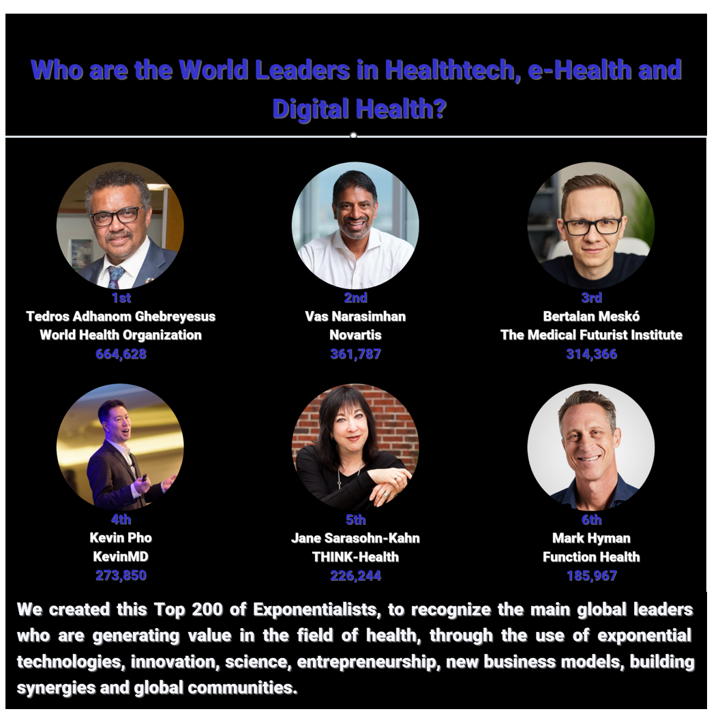 I'm in amazing company here with other #digitalhealth innovators, thinkers and doers. Thank you to Cristian Cortez Fernandez and Zallud for this recognition; I'm grateful.
 Jane was named as a member of the AHIP 2024 Advisory Board, joining some valued colleagues to prepare for the challenges and opportunities facing health plans, systems, and other industry stakeholders. Looking forward to AHIP 2024 in Las Vegas come June 11-13, 2024.
 Join Jane at AHIP's annual meeting in Las Vegas: I'll be speaking, moderating a panel, and providing thought leadership on health consumers and bolstering equity, empowerment, and self-care.